Step 1 – Framework
Build the Clinical and Operational Base for Adult ADHD Specialization
Overview This foundational step prepares clinicians to launch an evidence-based, well-organized Adult ADHD evaluation service. Chapter 1A – Clinical Foundation and Market Positioning Learn which core courses, reference books, and psychometric tools will inform your ADHD specialization. Start marketing your new specialty. 📄 Courses, Books, and Testing 📄 Marketing Chapter 1B – Scientific Foundations of Adult ADHD Dive into the neurodevelopmental roots, lifespan presentation, and comorbidities of ADHD. 📄 ADHD Nature and Course Chapter 1C – Clinical Infrastructure and Administrative Support Set up your office, digital systems, and administrative workflows for efficiency. 📄 Logistics 📄 Office Support Chapter 1D – Preparing the Client and Preventing No-Shows Organize pre-appointment tasks and implement strategies to reduce no-shows. 📄 Pre-Office Visit 📄 Zero No Show Rate Chapter 1E – Billing Structures and Reimbursement Strategy Compare billing models, decide on and implement an effective reimbursement strategy. 📄 Billing Decision 📄 Billing Insurance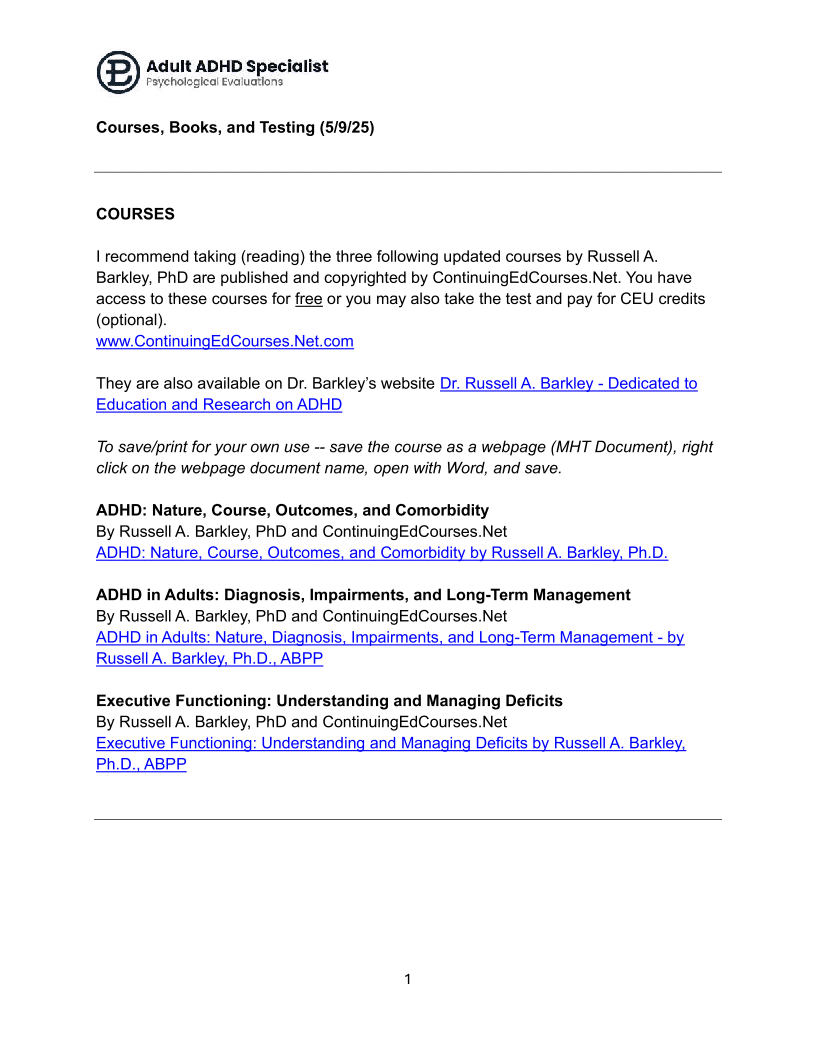
Step 2 – Skill Building
Mastering Psychometric Tests and Assessment Techniques
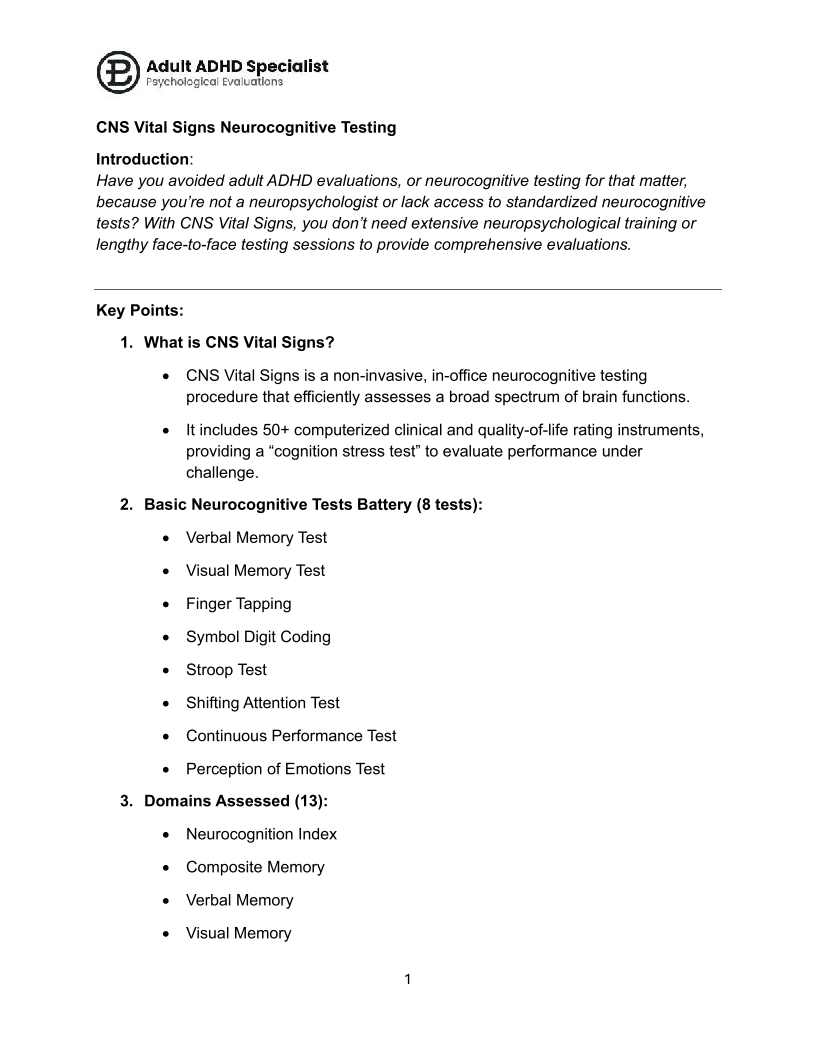
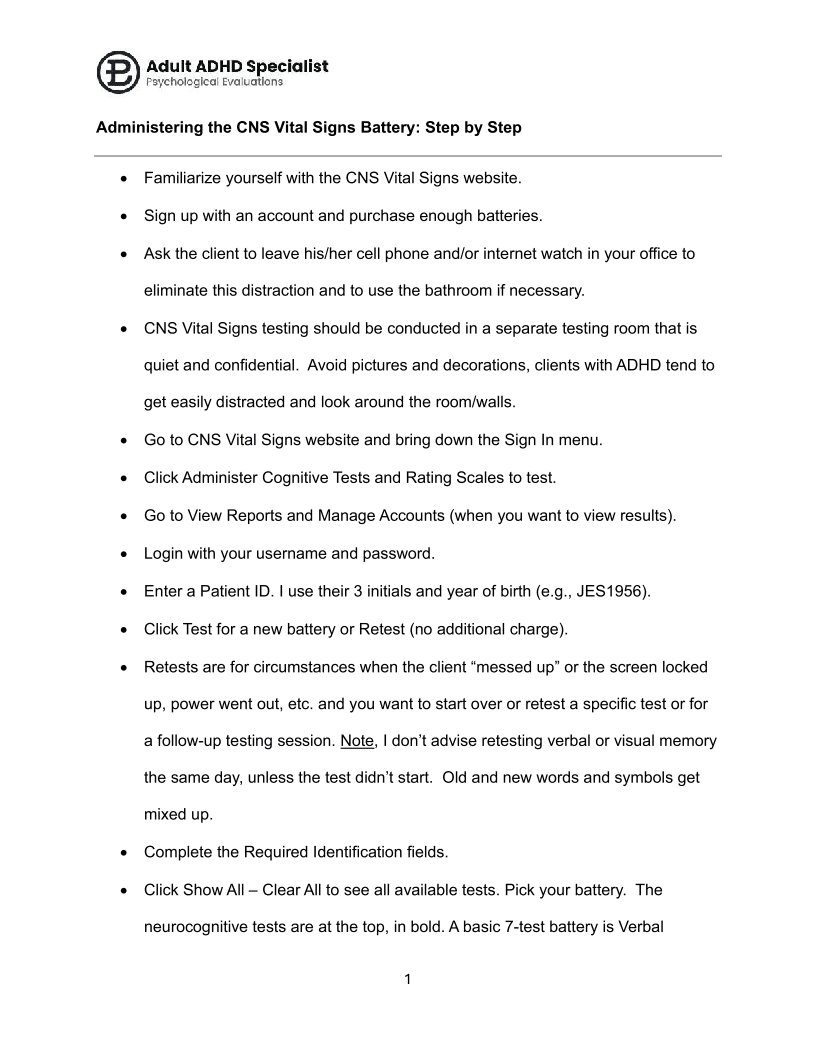
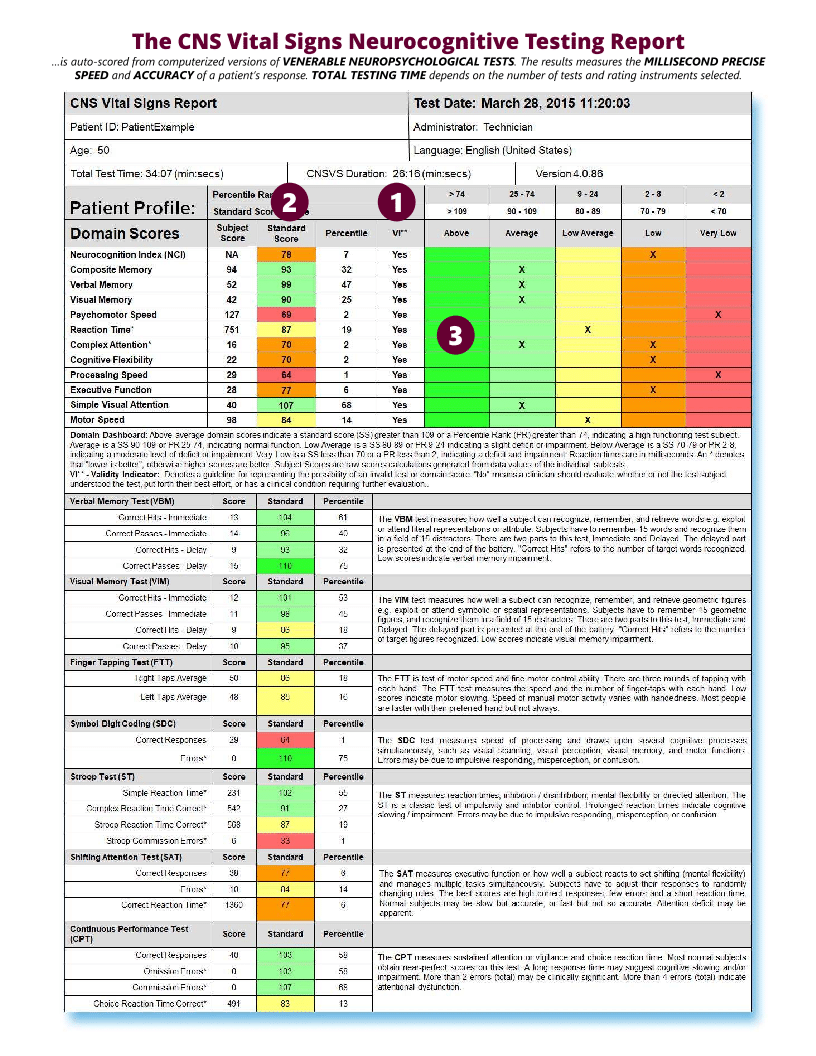
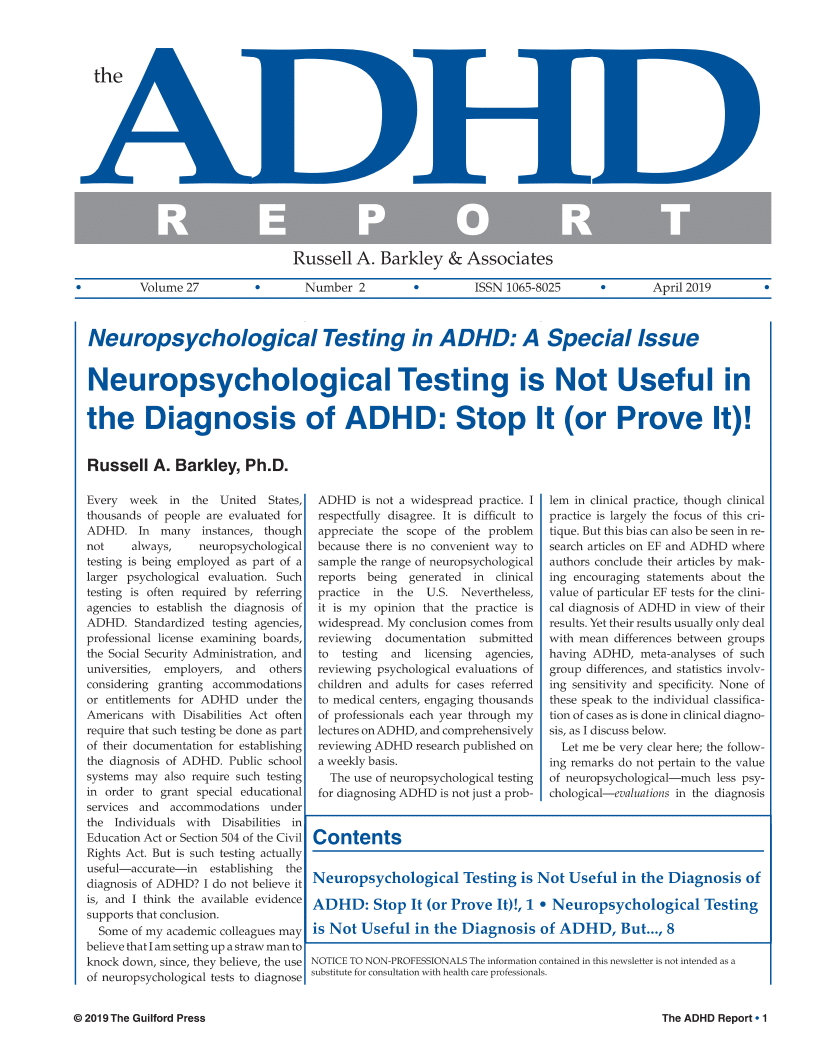
Overview This step builds diagnostic proficiency in using rating scales and neurocognitive tools with ethical rigor. Chapter 2A – Barkley Rating Scales Administer and interpret BAARS-IV, BDEFS, and BFIS for ADHD and executive functioning. 📄 Barkley Rating Scales Chapter 2B – CNS Vital Signs: Administration and Scoring Develop hands-on skills using the CNS Vital Signs neurocognitive battery. 📄 CNS Vital Signs NCB 📄 CNS VS Administration 📄 CNS VS Example Report Chapter 2C – Evaluating the Role of Neurocognitive Testing in ADHD Critically assess the value and limitations of neuropsychological testing in ADHD. 📄 Neuropsych Testing Not Useful 📄 Prevalence of ADHD with Neurocog 📄 CNS Vital Signs ADHD Chapter 2D – Ethical Practice and Boundaries of Competence Review ethical guidelines and define your professional scope of competence. 📄 Boundaries of Competence 📄 Ethics
Step 3 – Clinical Decision-Making
Diagnosing ADHD Using Criteria, Protocol, and Differential Diagnosis
Overview This step focuses on real-time evaluation using structured protocols, DSM-5-TR criteria, and differential diagnosis. Chapter 3A – Scientific Foundations of Adult ADHD Review the legitimacy and theoretical grounding of adult ADHD. 📄 Is Adult ADHD a Child Disorder 📄 ADHD in Adults Chapter 3B – Office Protocol and Evidence Integration Conduct structured in-person evaluations and synthesize results. 📄 Psych Assess of Adults 📄 Office Visit Protocol Chapter 3C – Applying DSM-5-TR Criteria and Differential Diagnosis Apply diagnostic criteria and systematically rule out alternatives. 📄 Criteria-Based Diagnosis 📄 Differential Diagnosis Chapter 3D – Developmental History and Symptom Validity Tools Gather developmental data and screen for mimicking conditions. 📄 Developmental and Differential Questions 📄 Supplemental Instruments Chapter 3E – Documentation for Disability and Accommodations Translate diagnostic results into ADA/504-compliant accommodations reports. 📄 Disability and Accommodations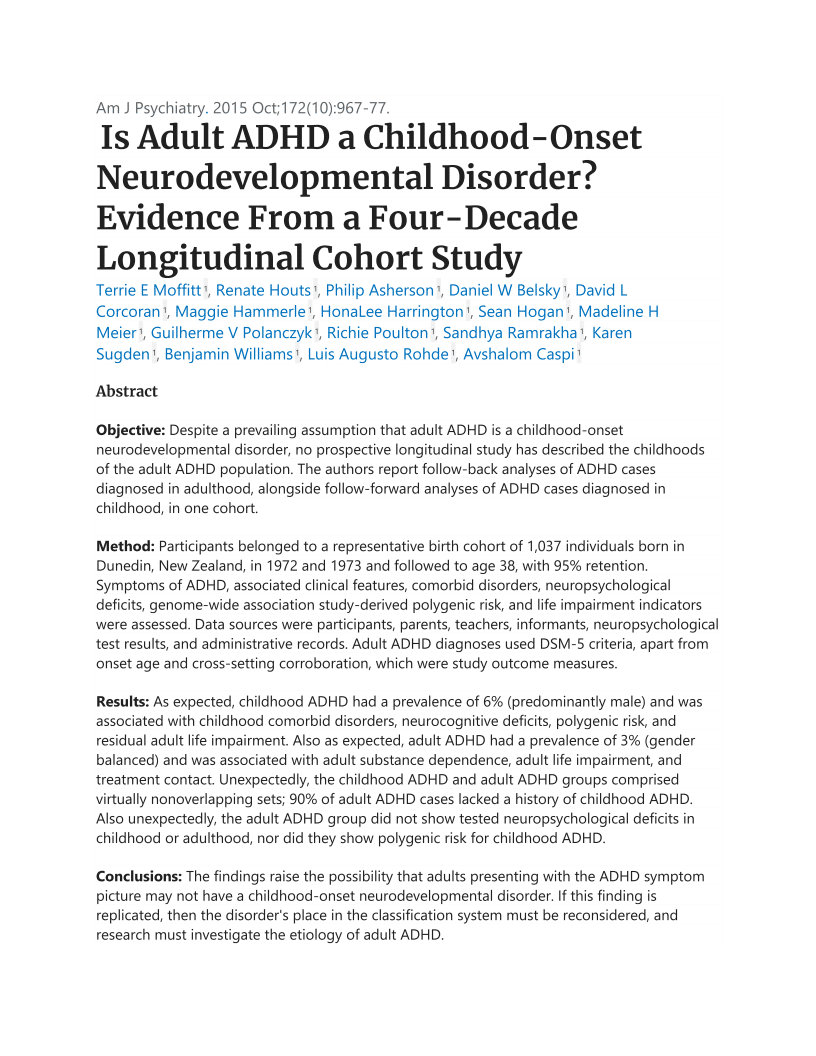
Step 4 – Report Writing
Findings, Interpretation, Recommendations, and Report Writing
Overview This final step guides report construction, interpretation, and professional submission of results. Chapter 4A – Prepare for Writing: Workspace, Templates, and Strategy Use structured templates and writing strategies for efficient reporting. 📄 Basic Report Writing 📄 Basic Report Megan 📄 Basic Report Template Chapter 4B – Write Recommendations Craft individualized treatment and functional recommendations. 📄 Recommendations and Samples 📄 Recommendations for Executive Functioning Chapter 4C – Finalize, Submit, and Bill Professionally Securely finalize and submit client reports while maintaining workflow standards. 📄 Report Preparation 📄 Report Submission Chapter 4D – Address Differential Diagnosis and Cognitive Limitations Support complex diagnostic findings with evidence-based literature. 📄 Meds Do Not Normalize 📄 ADHD and Substance Use Dis 📄 Concentration Deficit Disorder Chapter 4E – Address Remote Evaluations and Ethical Considerations Conduct remote evaluations within APA guidelines and best practices. 📄 Remote ADHD Evaluations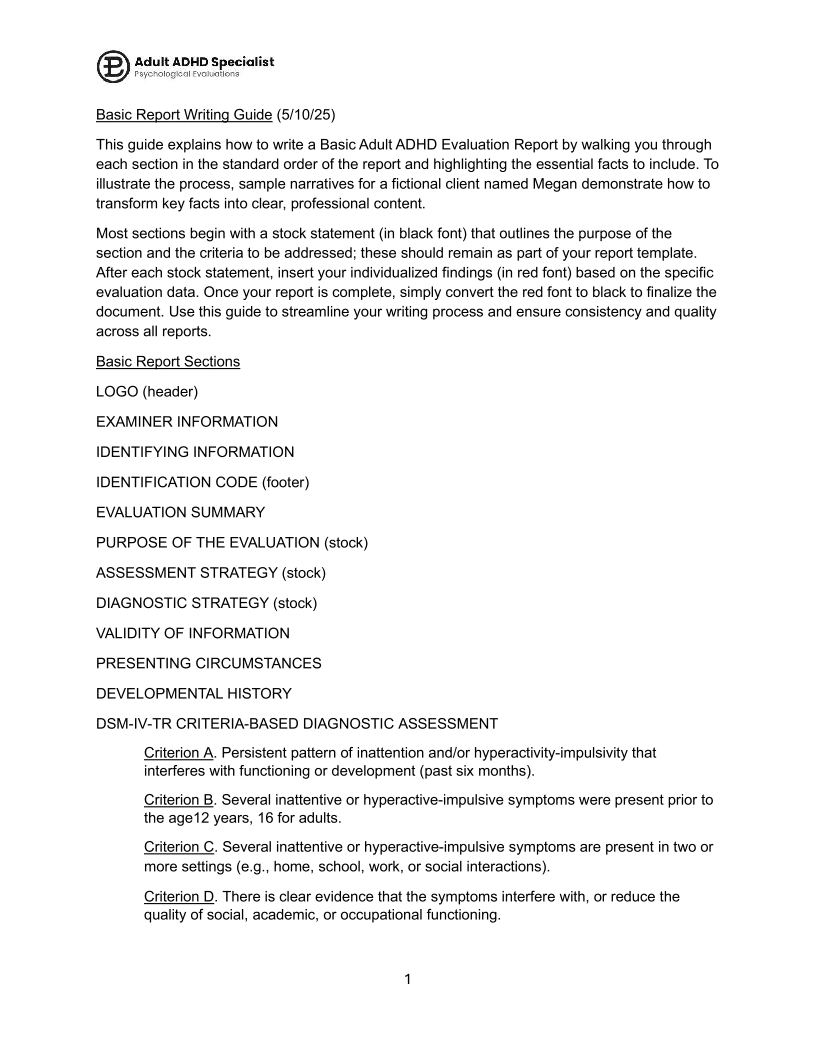
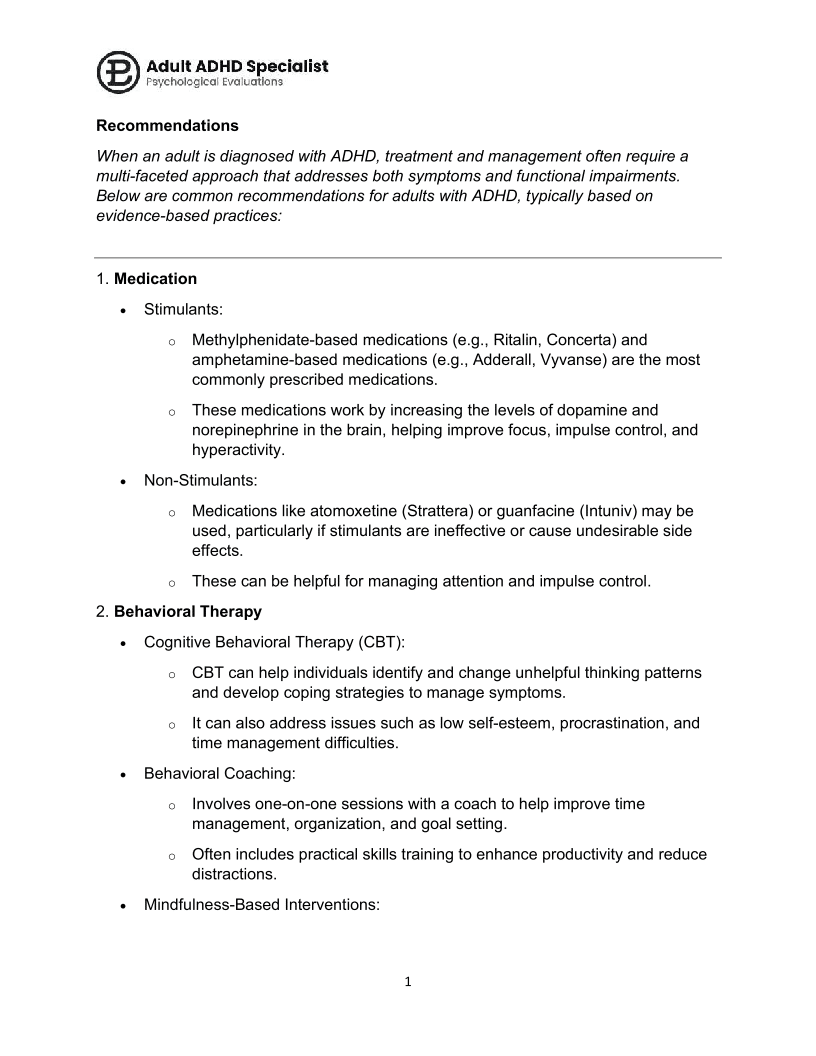
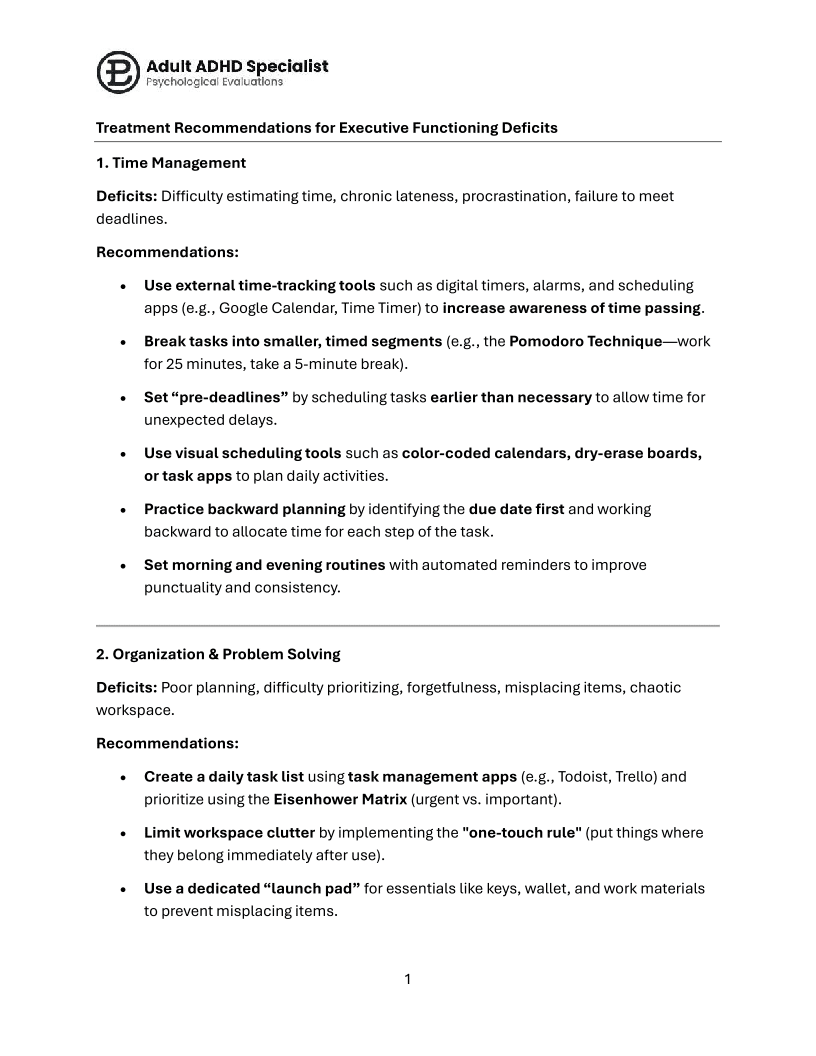
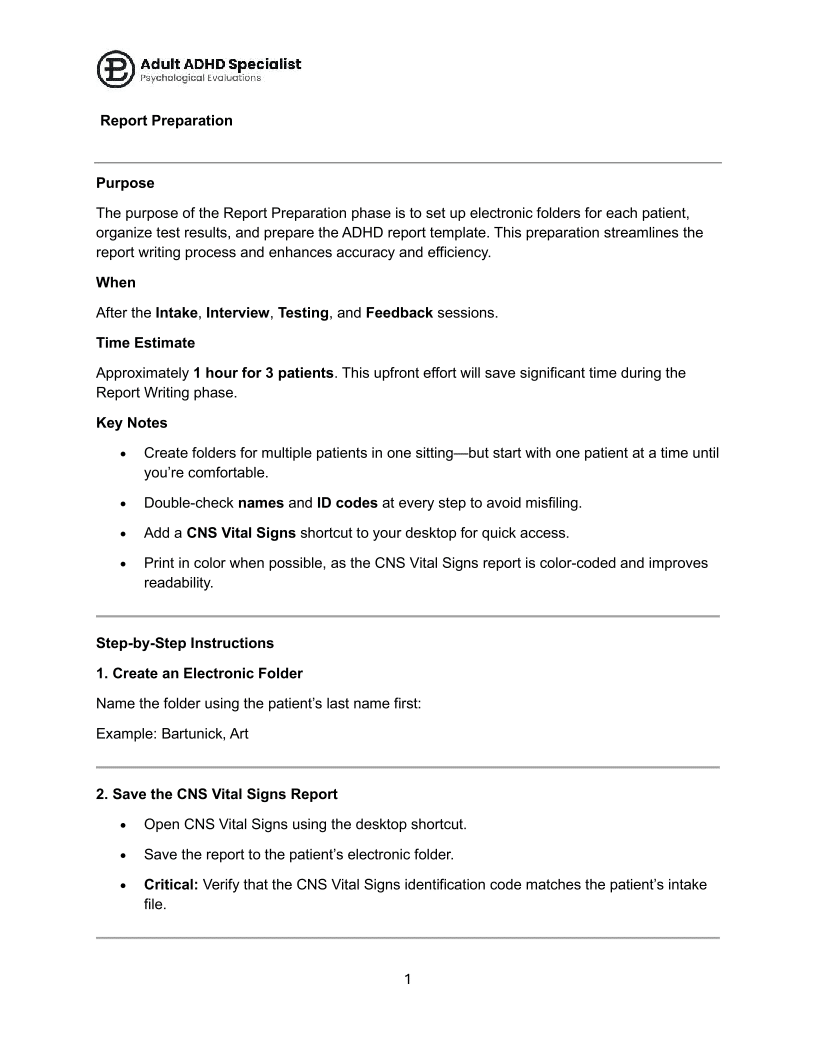
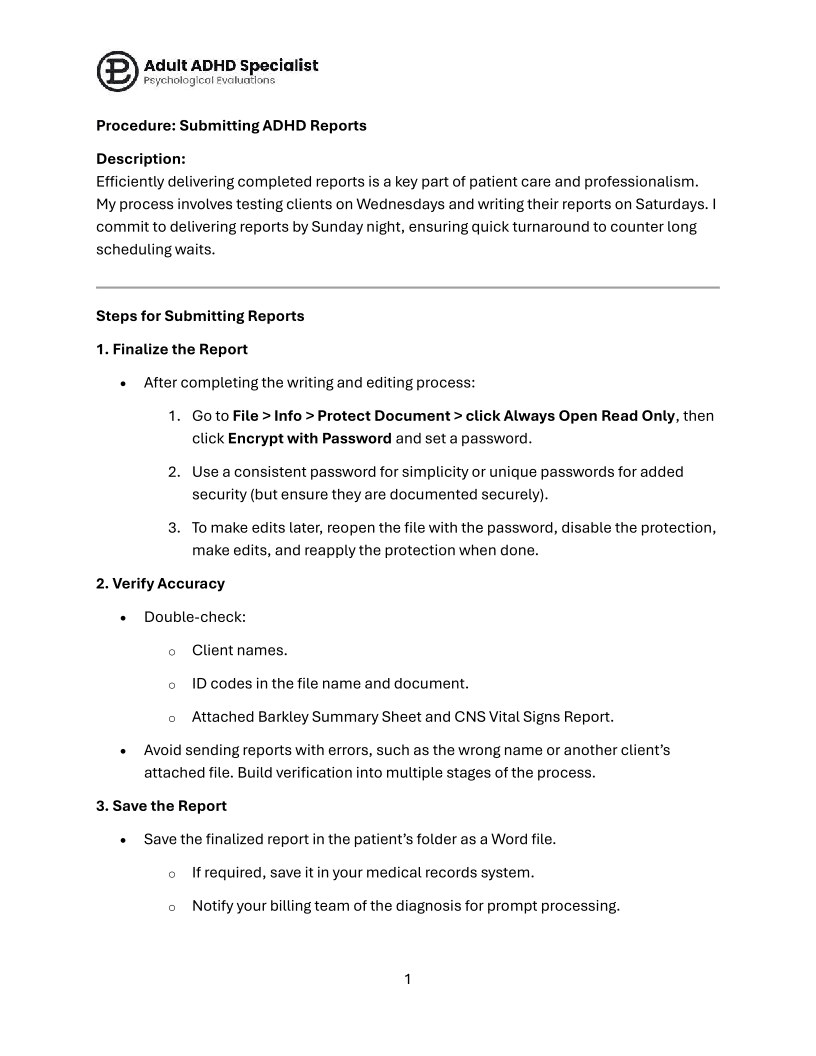
This Table of Contents outlines the four-step structure of the Adult ADHD Specialist Manual. Click each chapter for an overview.
Item #1
Cover
Preface and Use
Table of Contents
30-Day Action and Quick Start Plans
Step 1: Framework – Build the Foundation
Orientation to ADHD science, billing, systems, and visibility.
Item #1
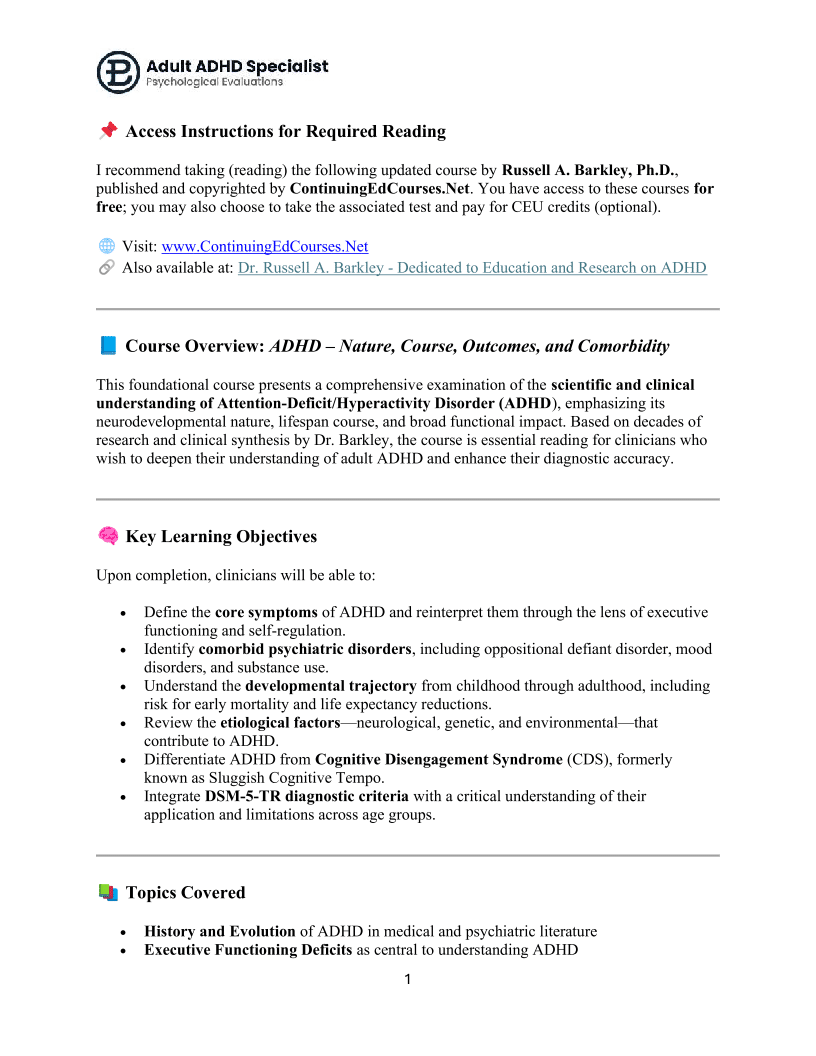
ADHD – Nature, Course, Outcomes, and Comorbidity — Overview of adult ADHD grounded in Barkley’s model.
Billing Decision — Choosing between private pay and insurance-based models.
Billing Insurance — Practical guide to insurance billing, coding, and workflows.
Courses, Books, and Tests — Curated list of key references and essential tools.
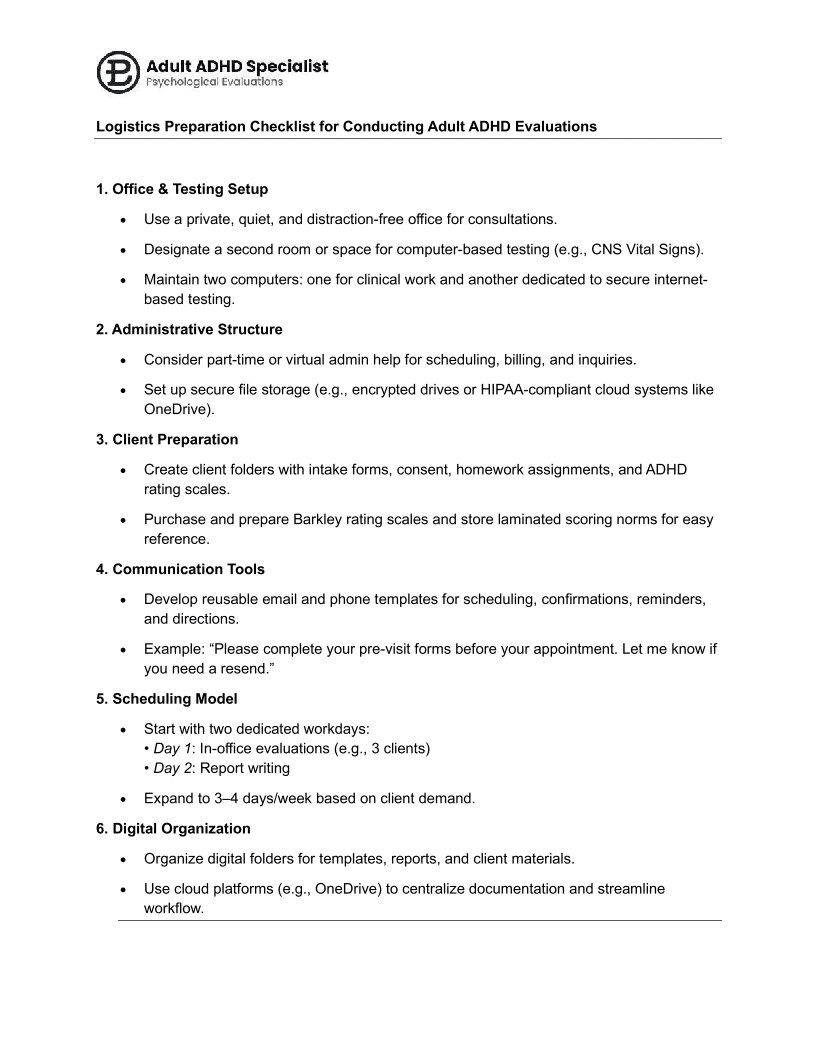
Logistics — System setup, documentation workflow, and physical space.
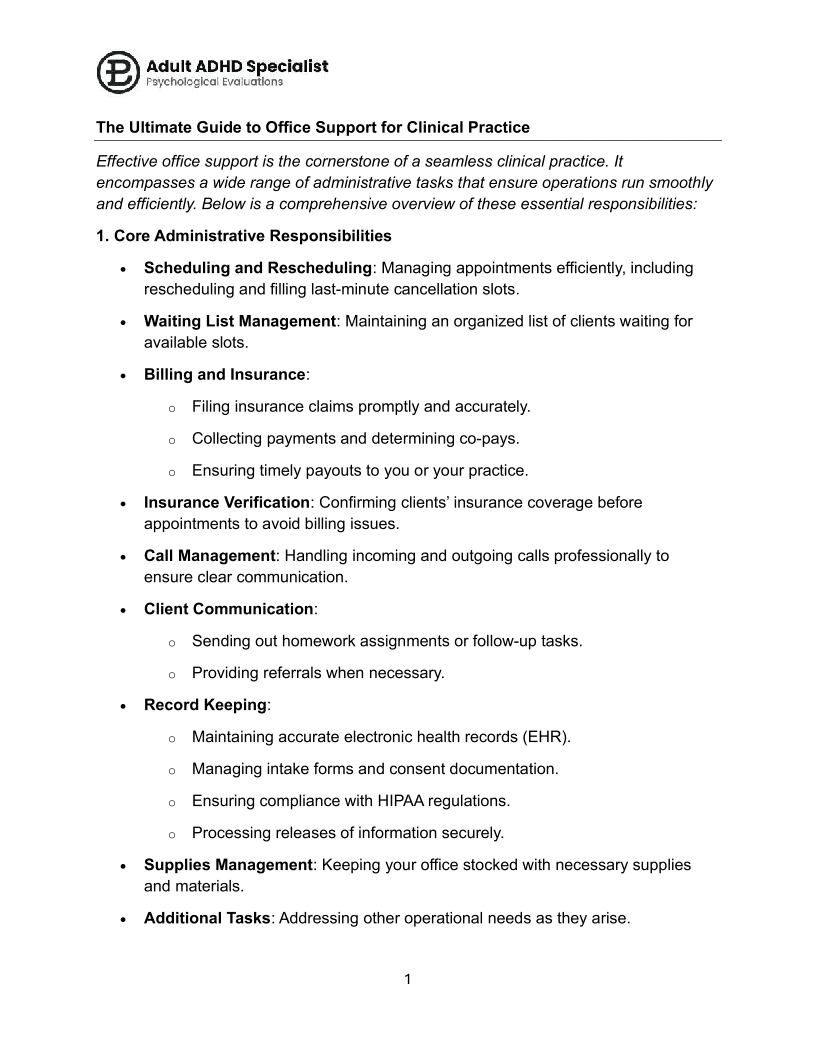
Office Support — Administrative systems to streamline operations.
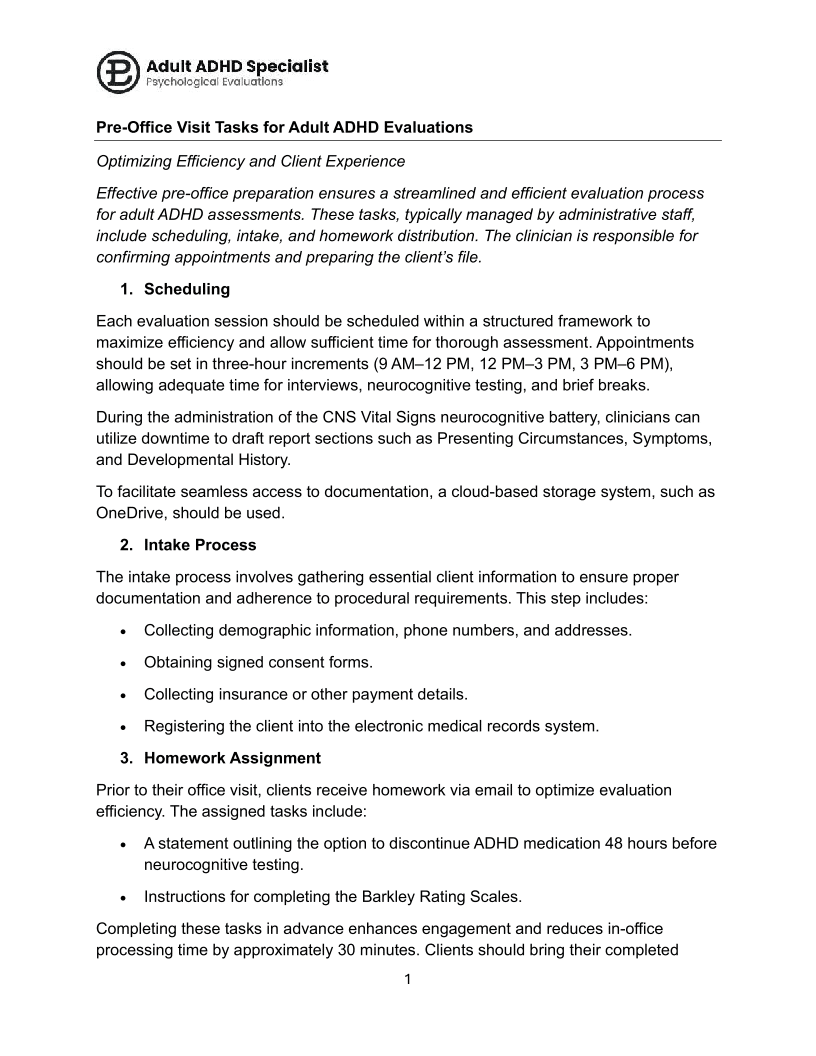
Pre-Office Visit — Intake procedures, consents, and pre-visit file organization.
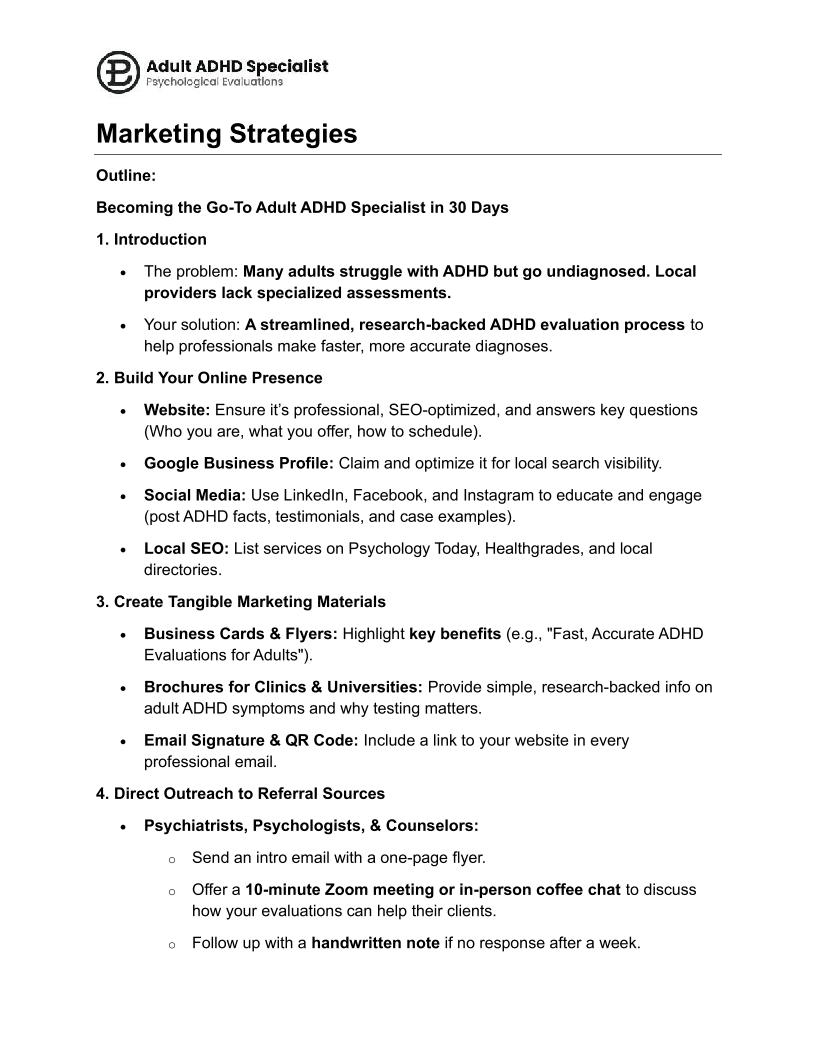
Marketing — Practical approaches to build visibility and referrals.
Zero No-Show Rate — A 5-part strategy to eliminate no-shows and maximize engagement.
Step 2: Skill Building – Master Tools and Data
Training in evaluation procedures, ethics, and test interpretation.
Item #1
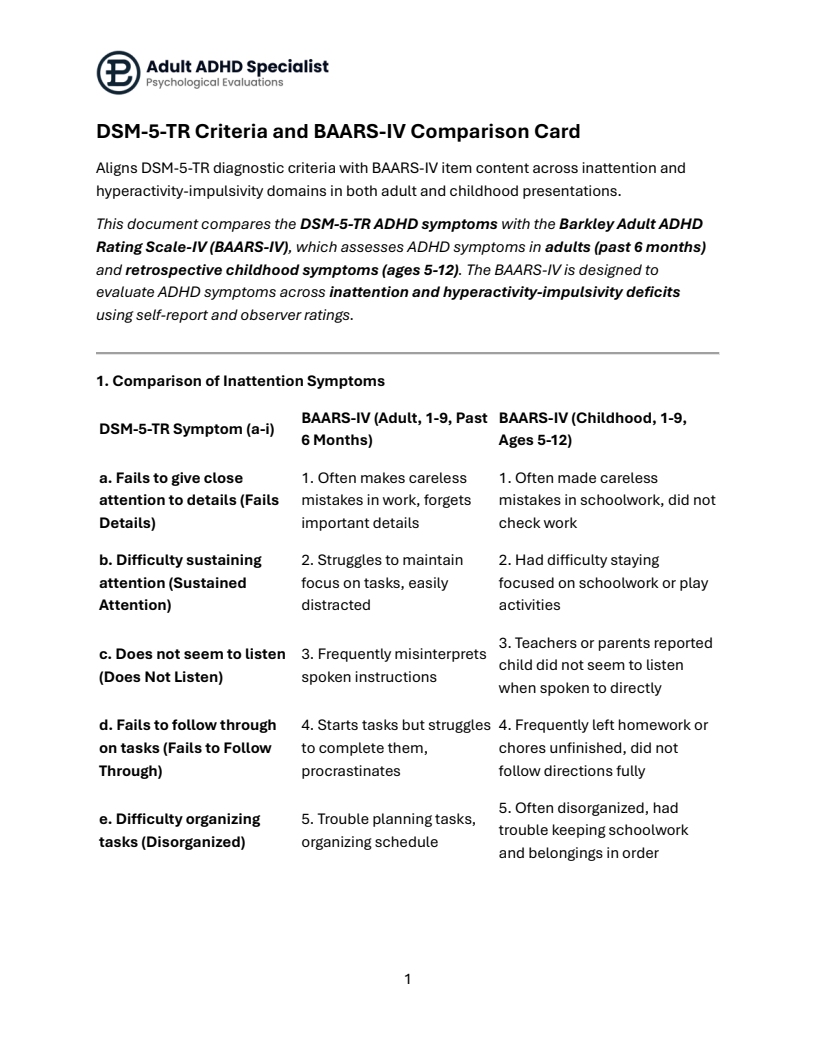
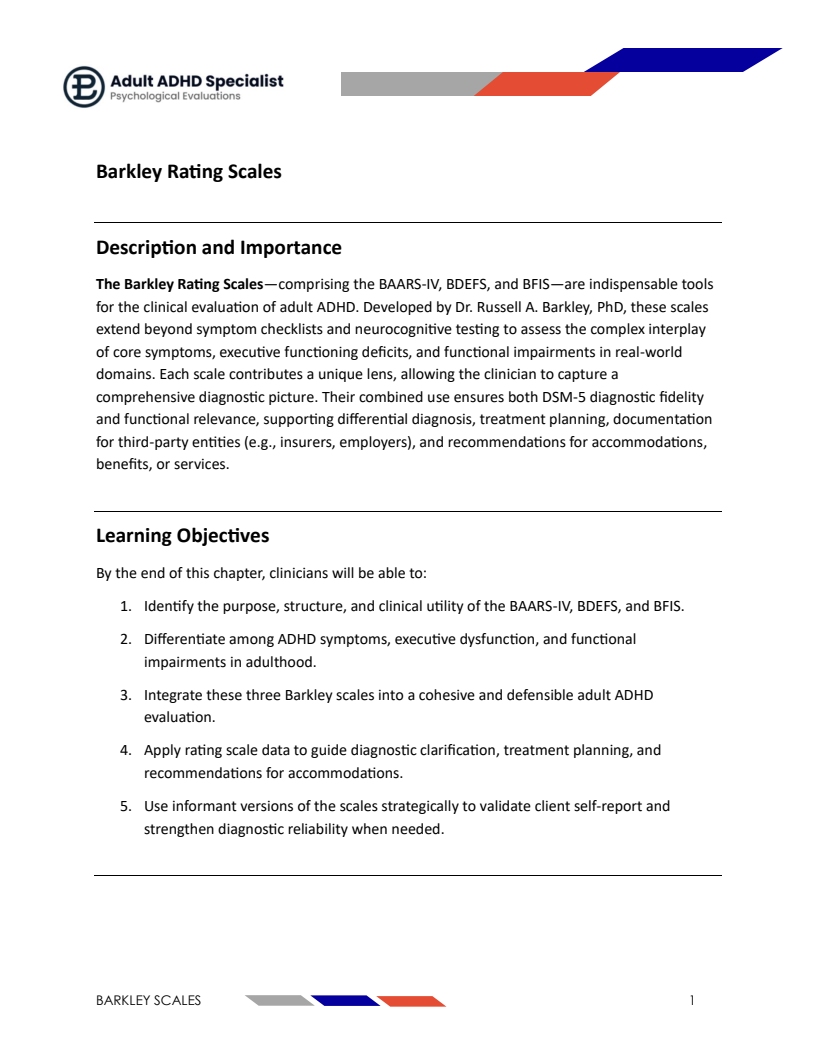
Barkley Rating Scales — Use and interpretation of BAARS-IV, BDEFS, BFIS.
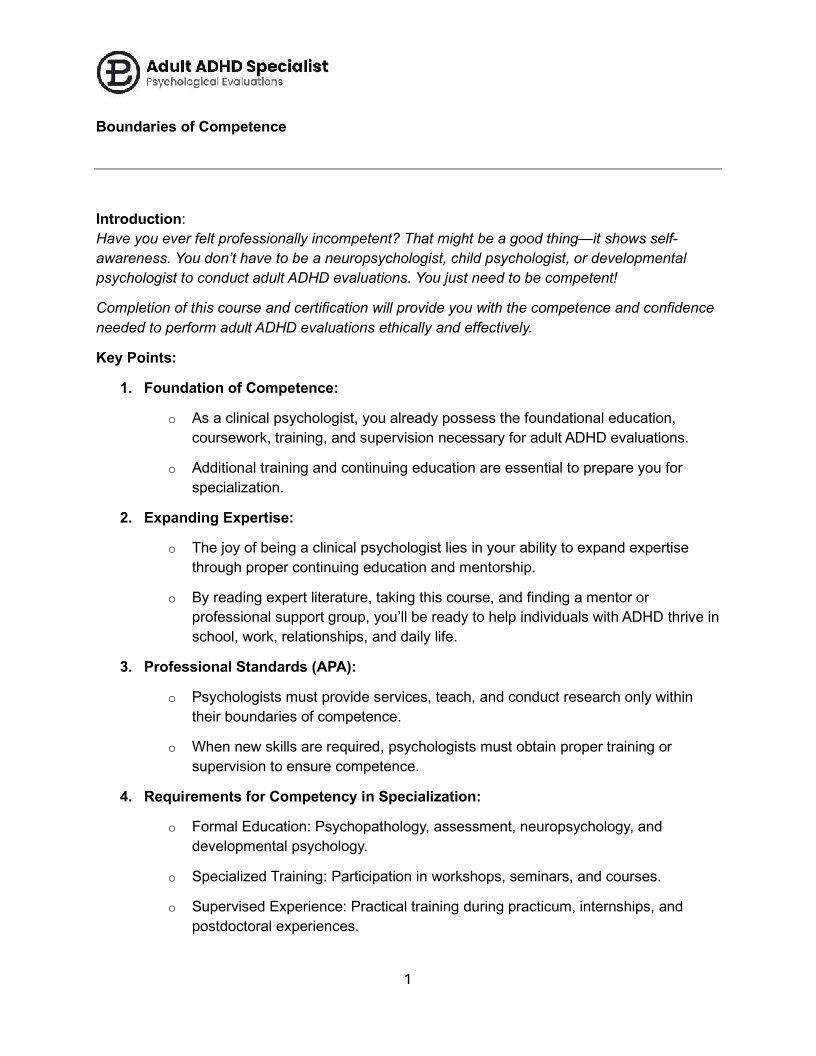
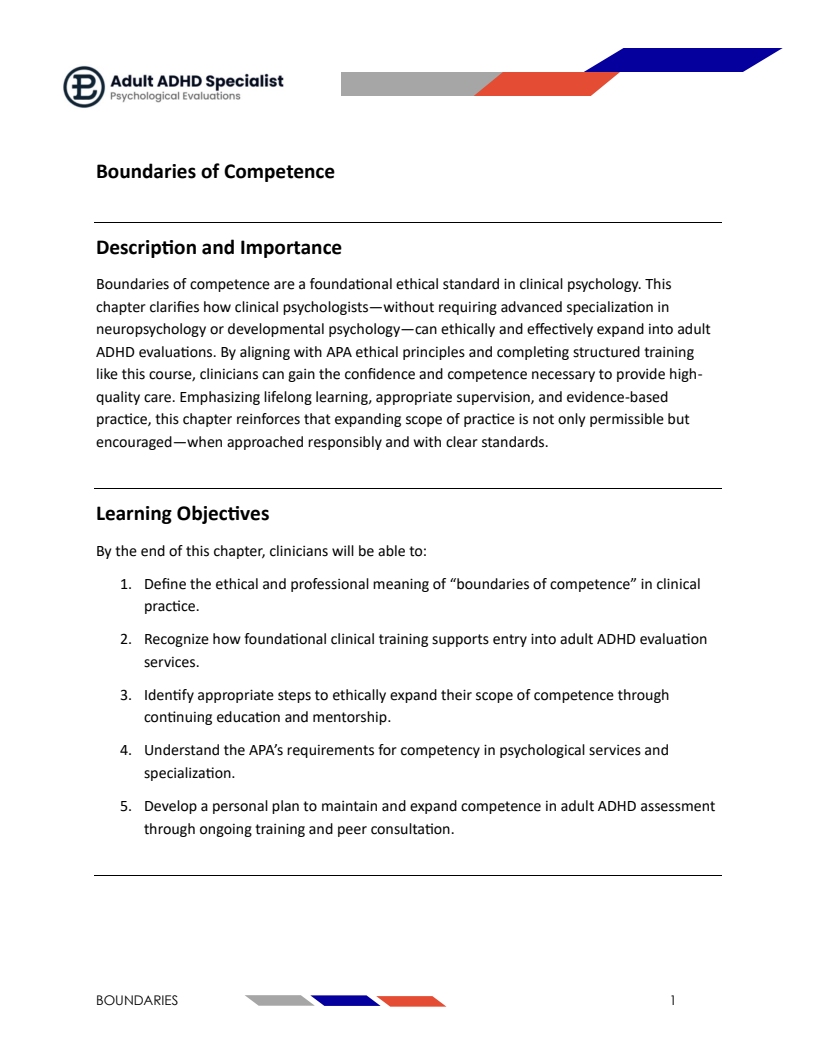
Boundaries of Competence — APA guidelines for expanding clinical scope.
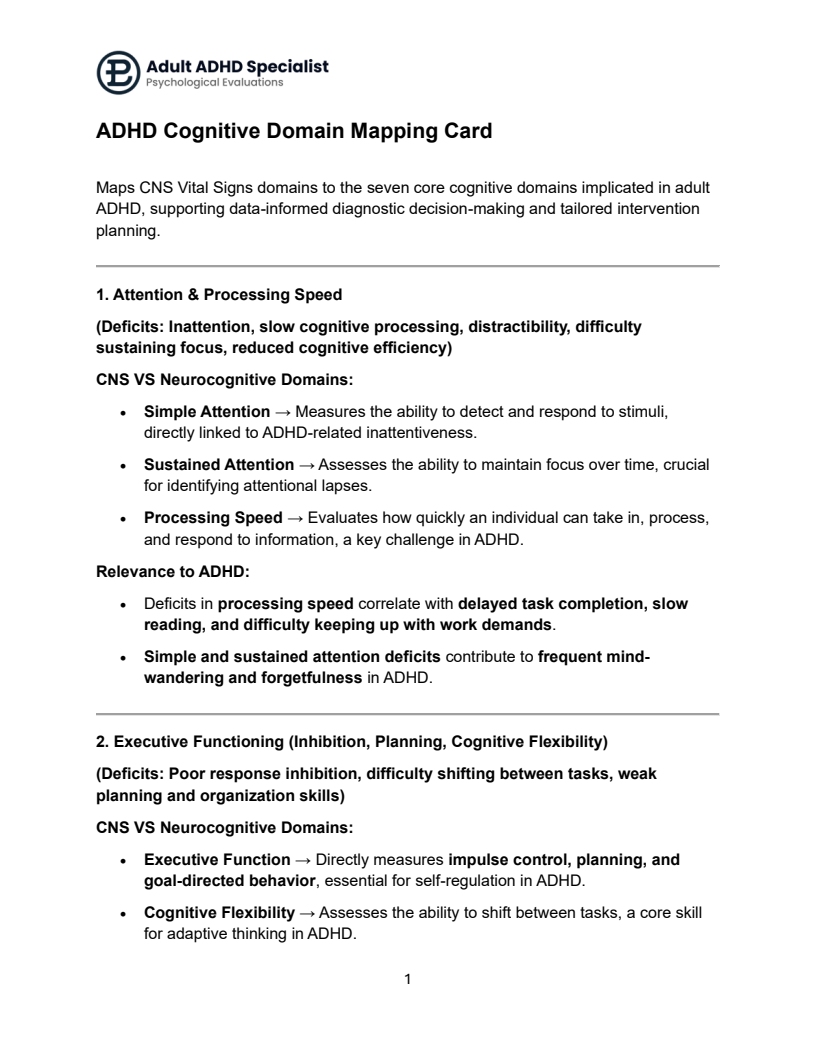
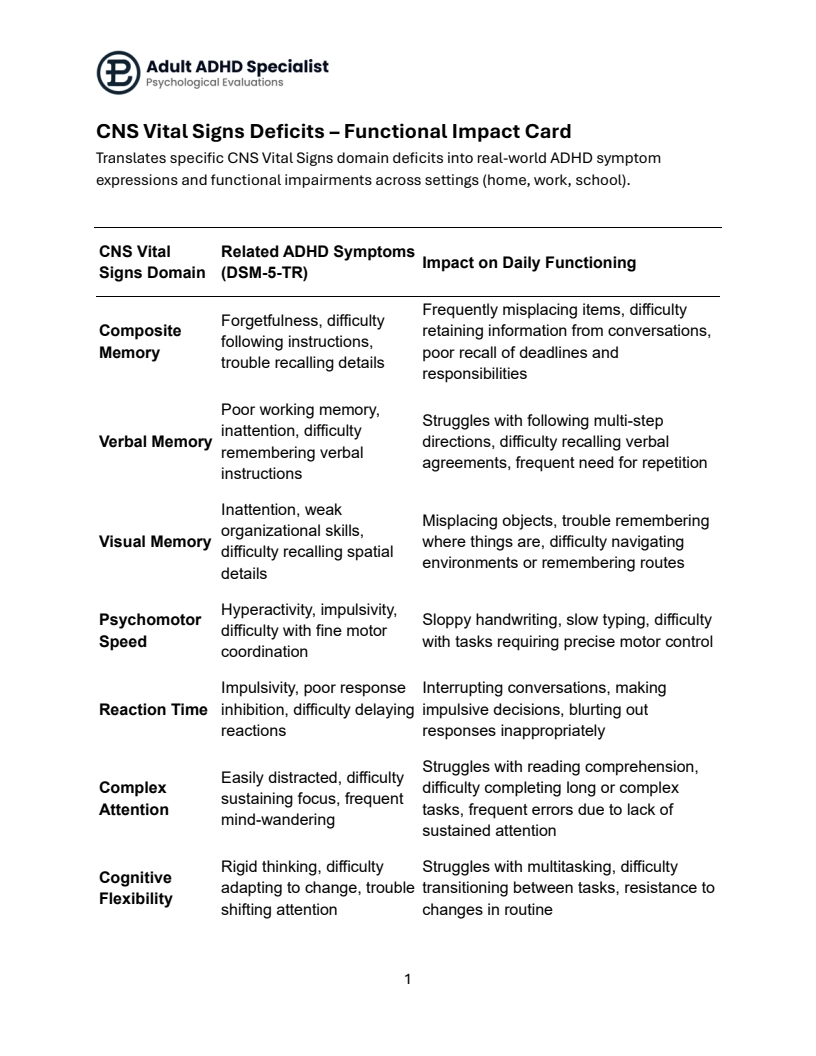
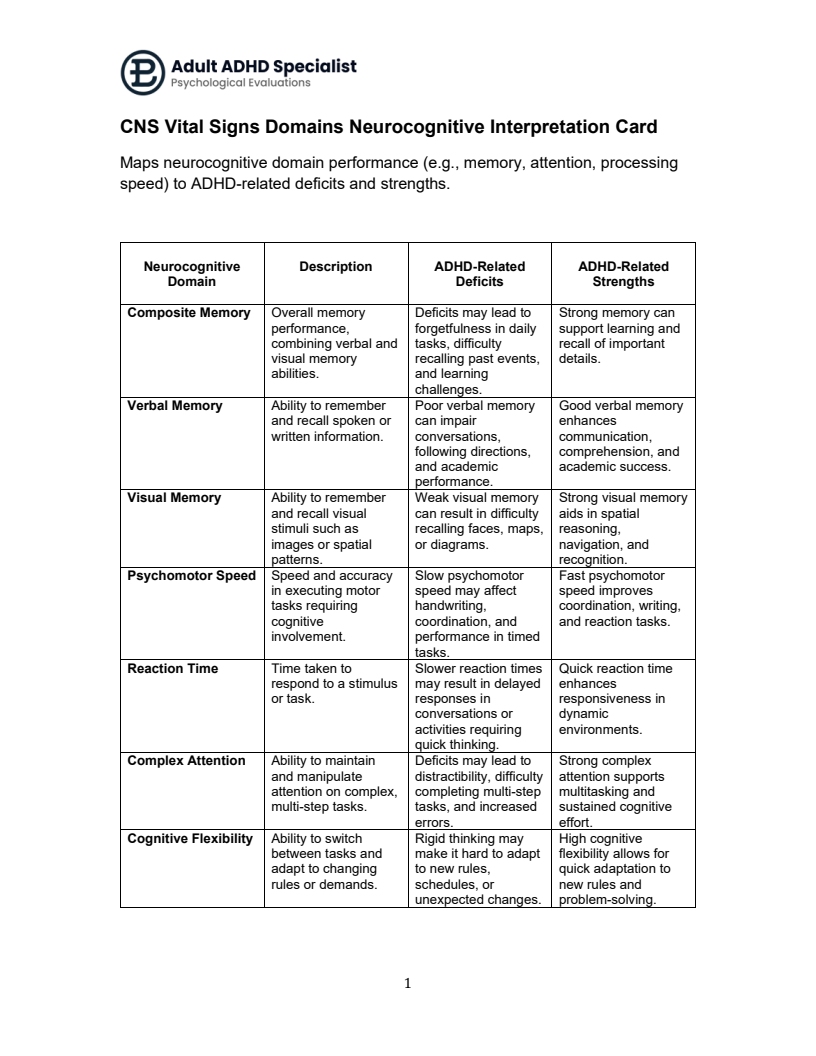
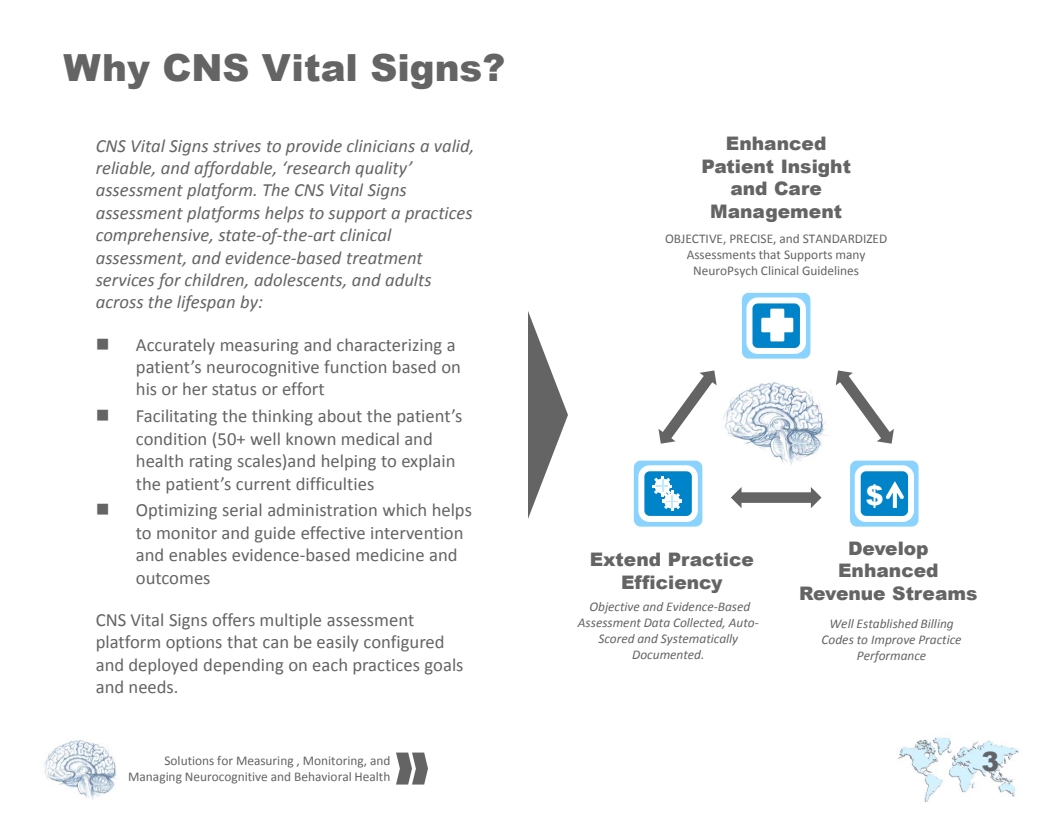
CNS Vital Signs ADHD — Official CNS interpretive references for ADHD assessments.
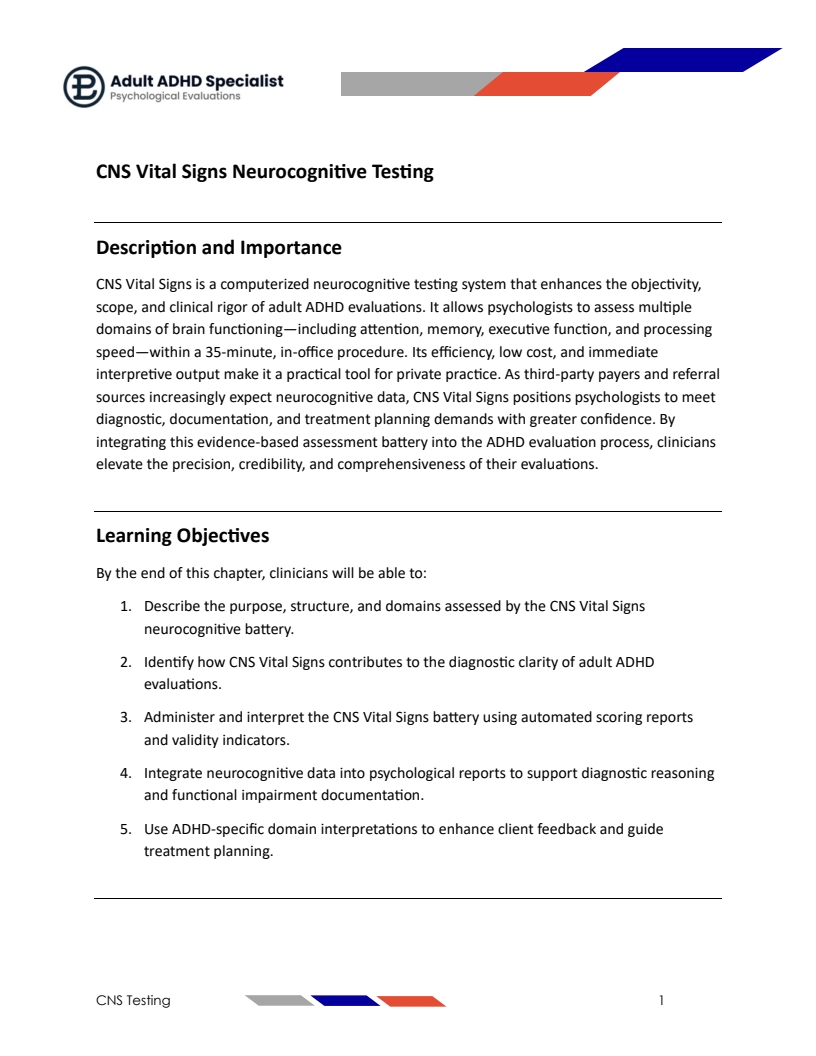
CNS Vital Signs Testing — Interpretation of domain scores, indicators, and patterns.
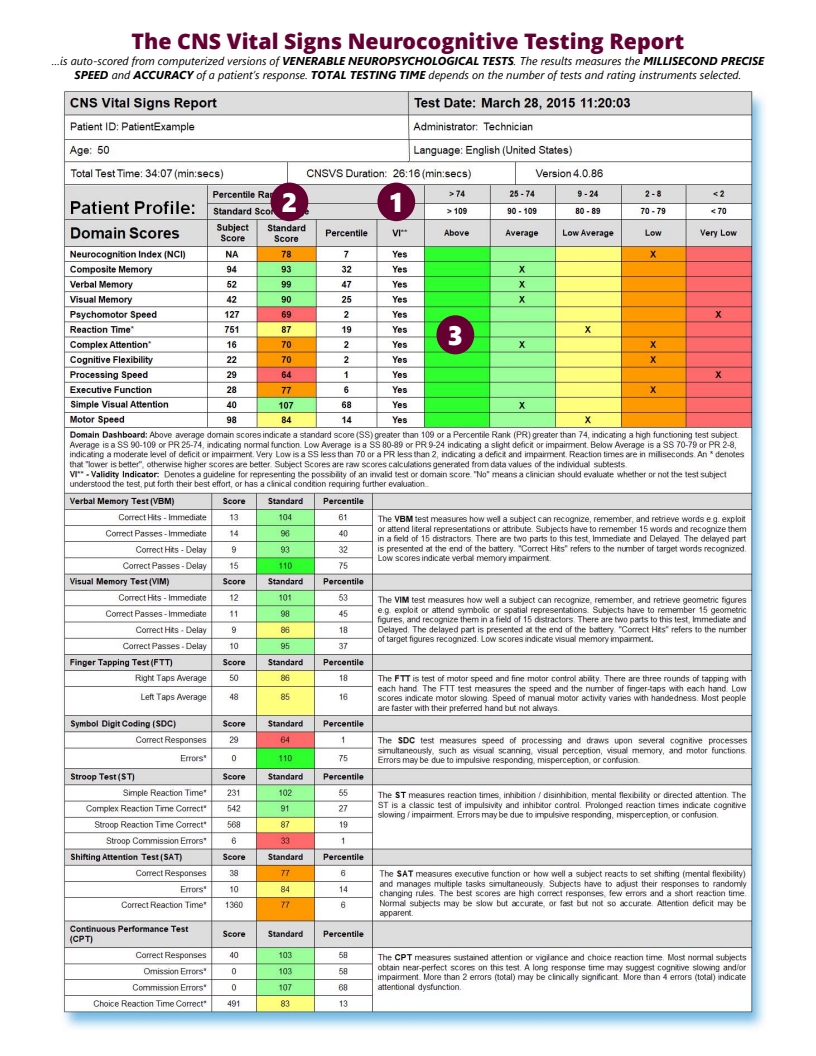
CNS VS Example Report — Real-world example of an ADHD neurocognitive profile.
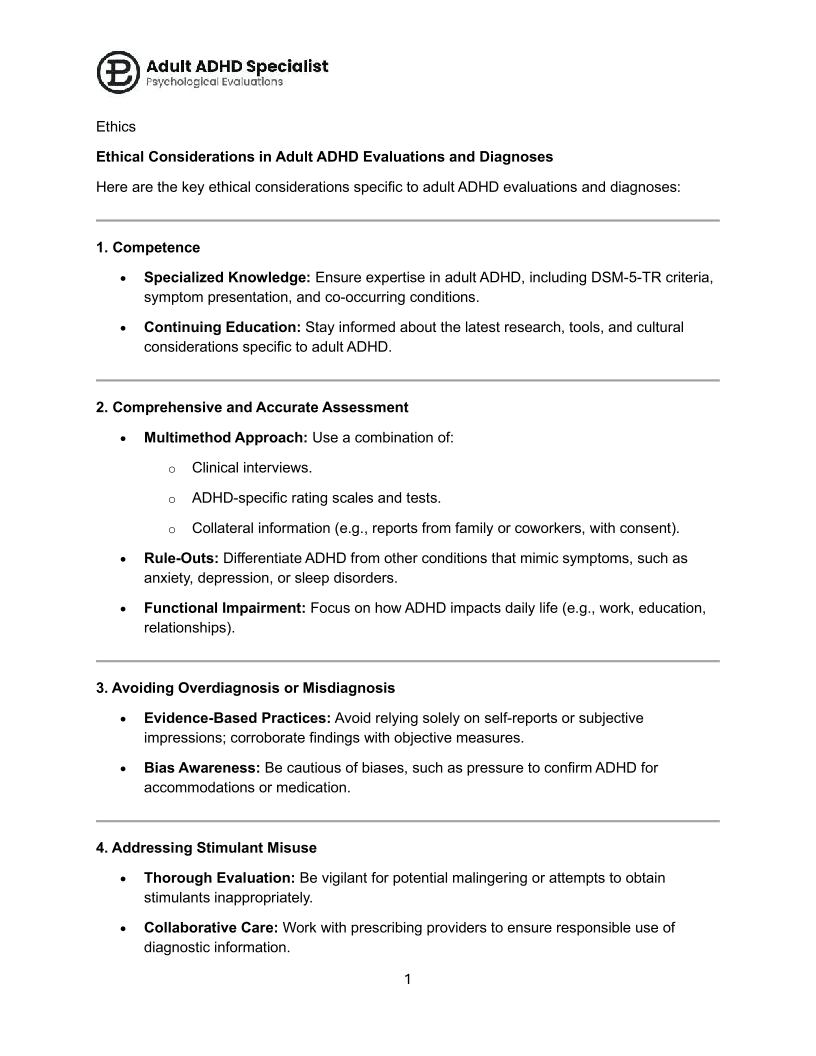
Ethics and ADHD — Ethical practice in informed consent, testing, and documentation.
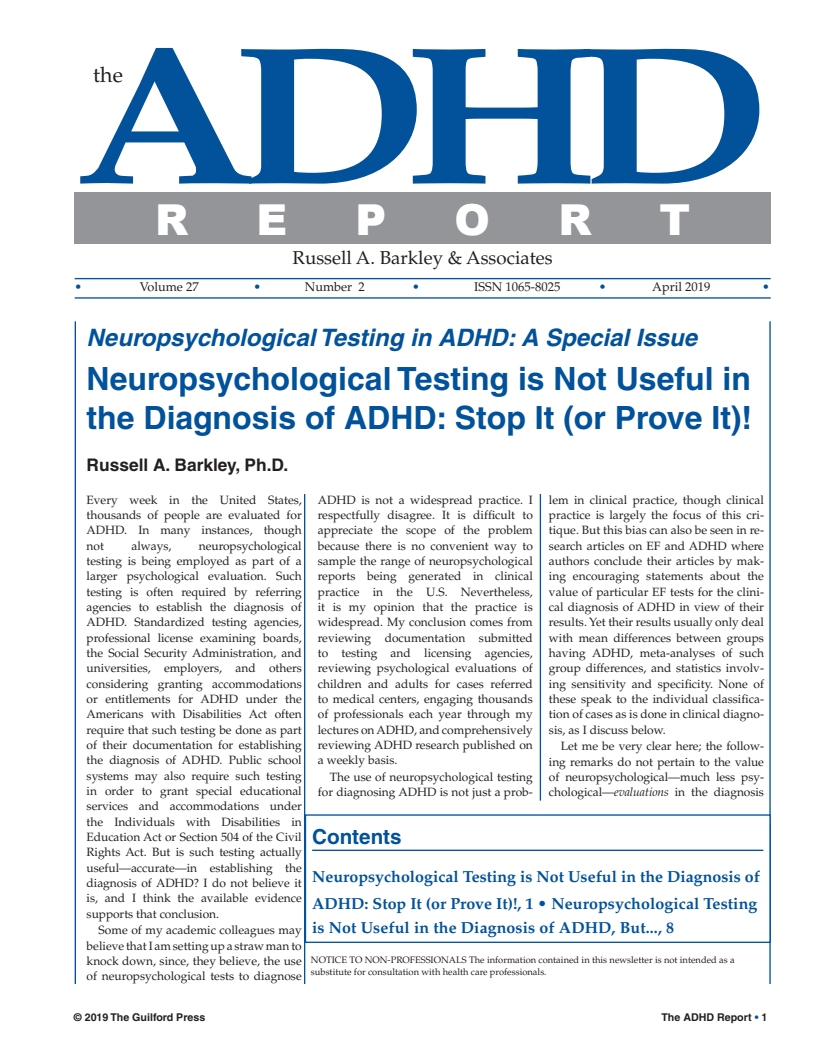
Neuropsych Testing Not Useful — Barkley’s rationale for avoiding traditional neuropsych batteries.
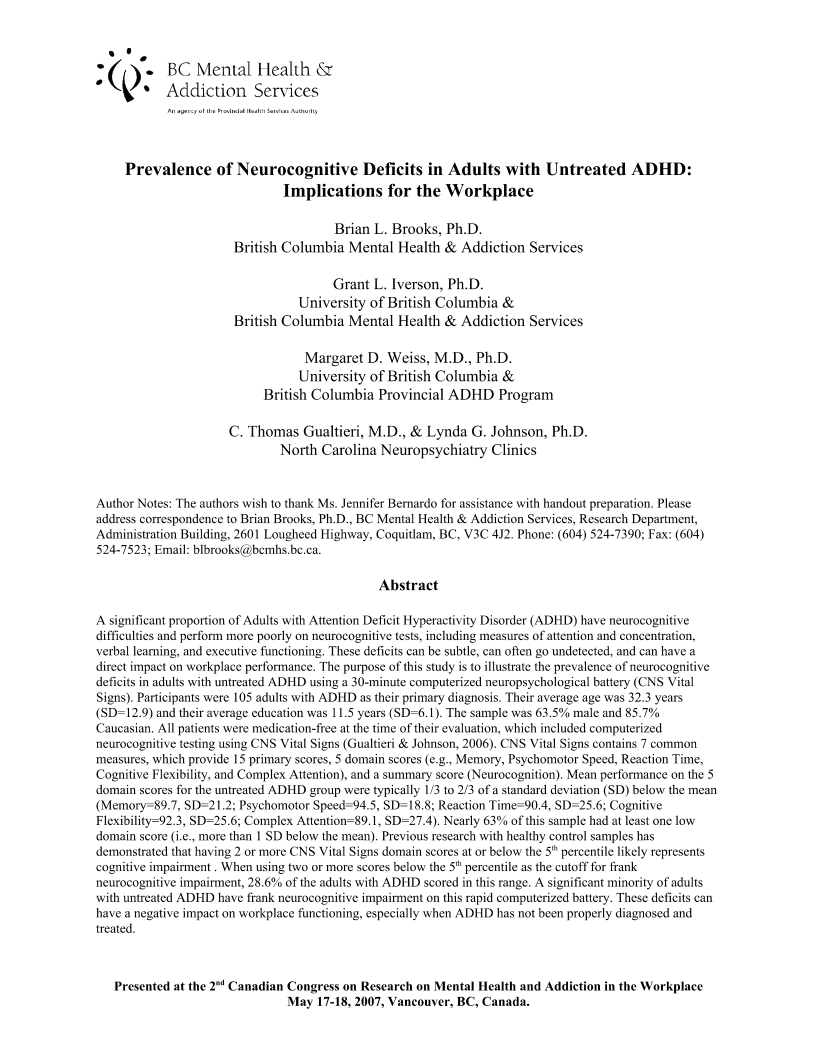
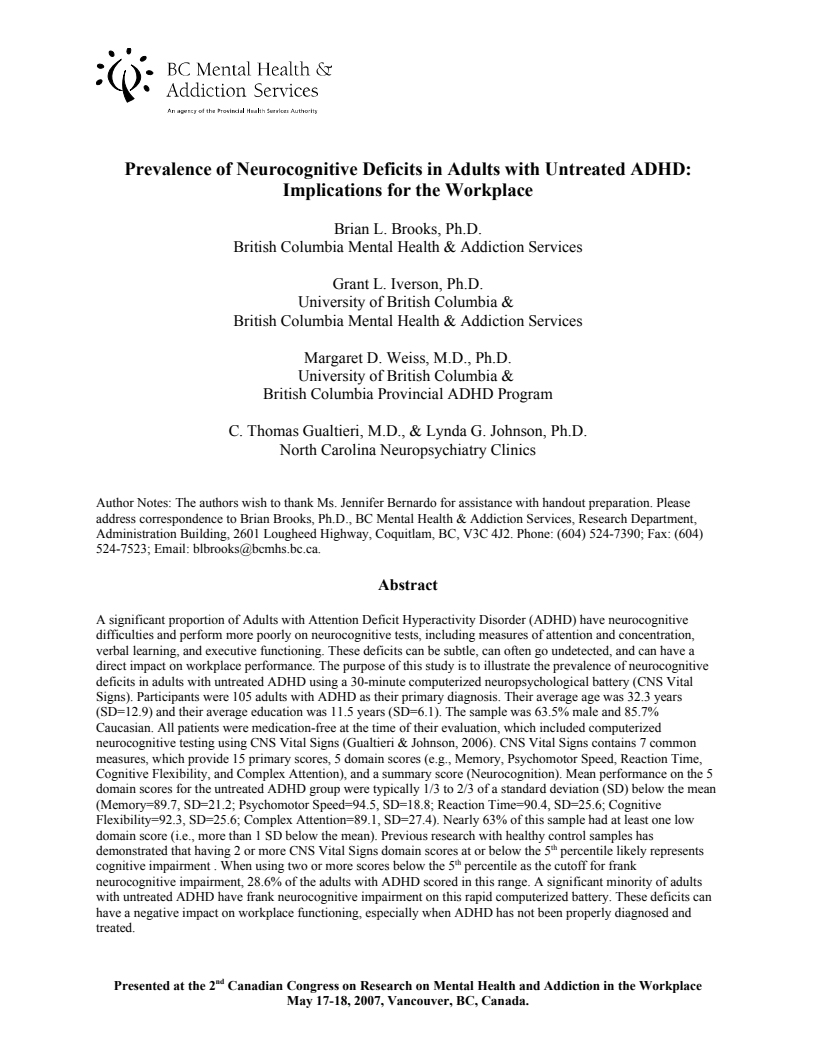
Prevalence of Neurocog Deficits — Research summary on common deficits in adult ADHD.
Step 3: Clinical Decision Making – Diagnose with Confidence
Integration of structured data, interviews, and diagnostic criteria.
Item #1
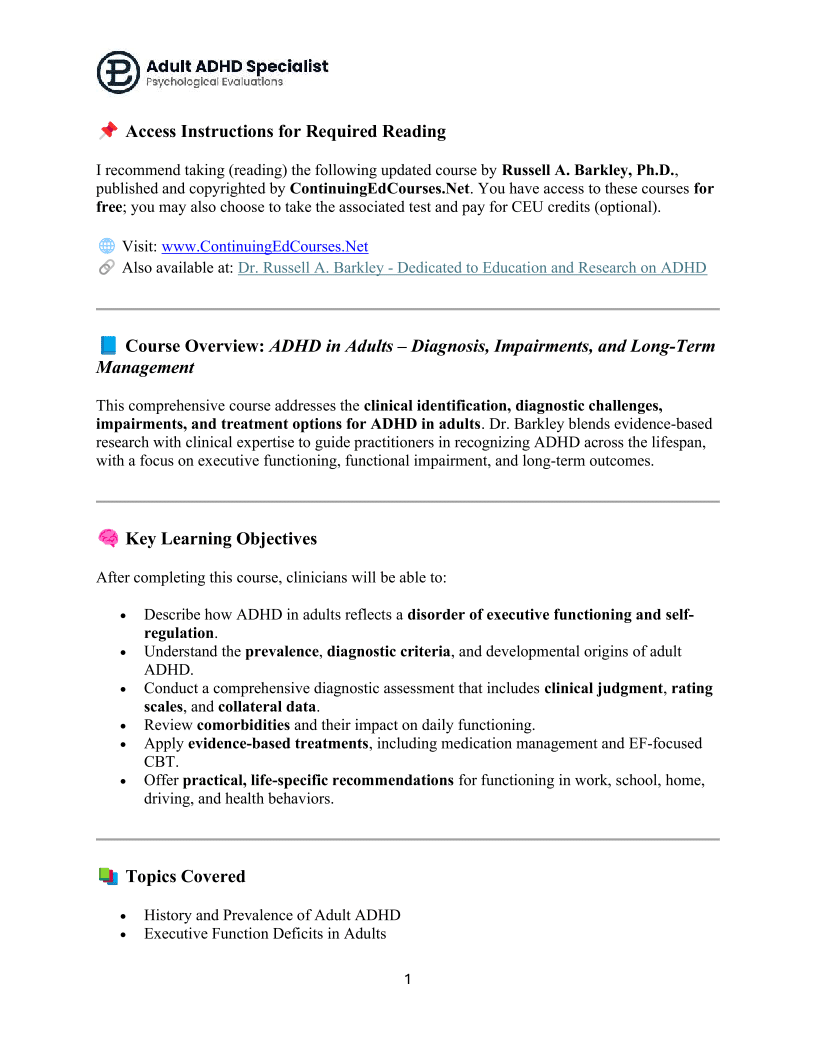
ADHD in Adults — Barkley’s updated clinical training on adult ADHD identification.
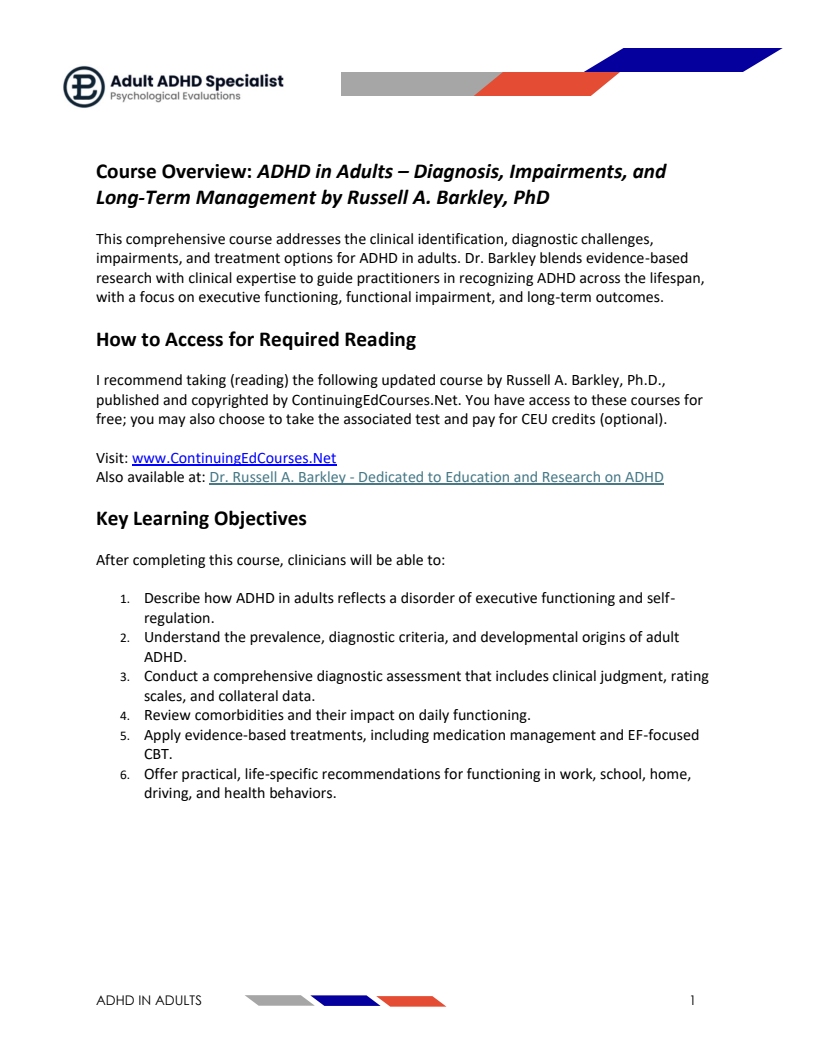
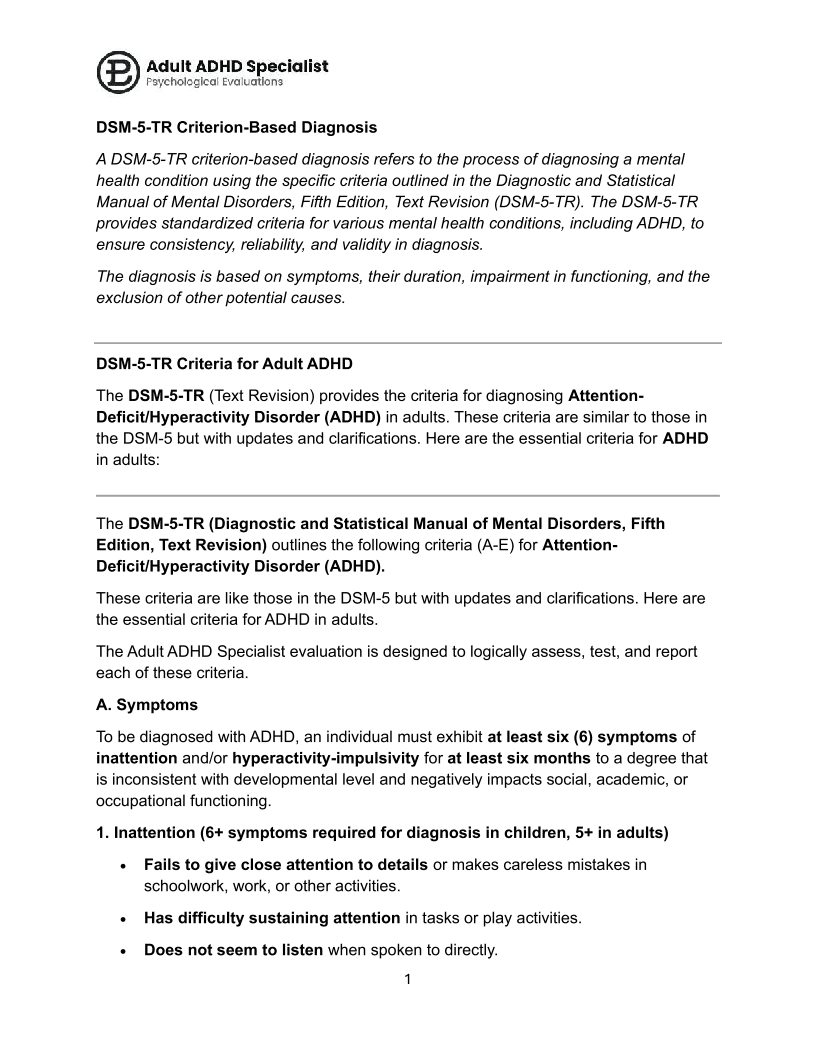
Criteria-Based Diagnosis — Checklist format aligned with DSM-5-TR for symptom verification.
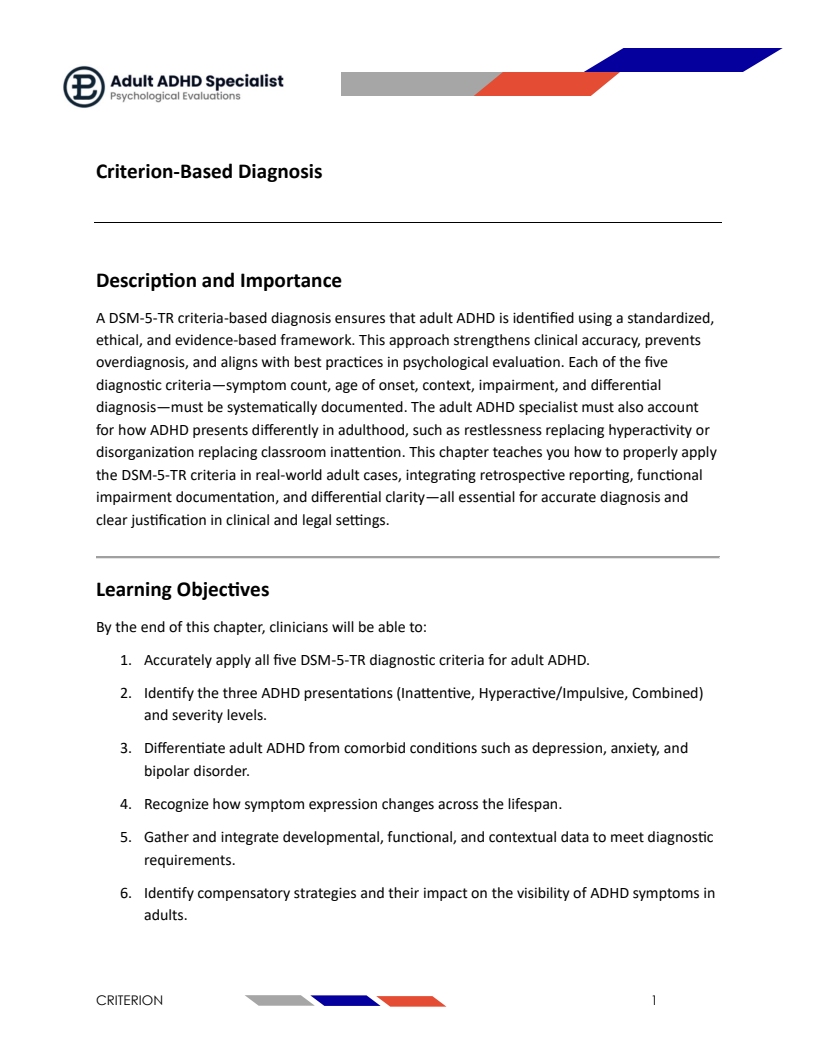
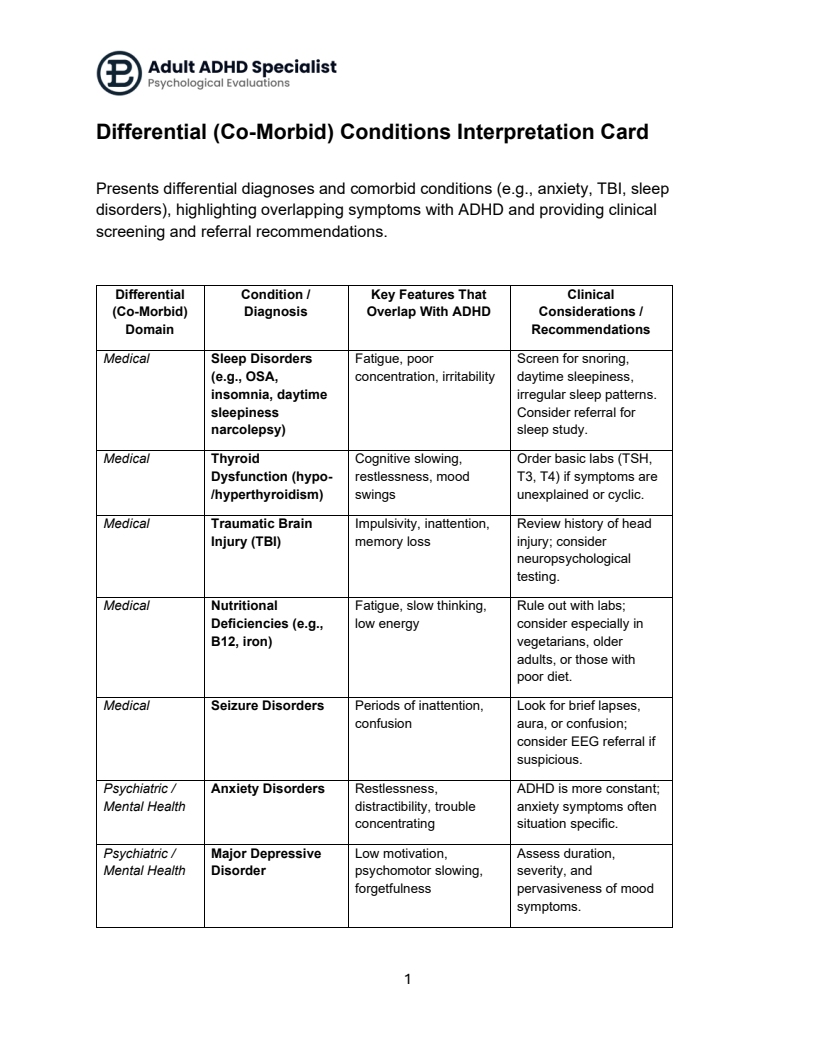
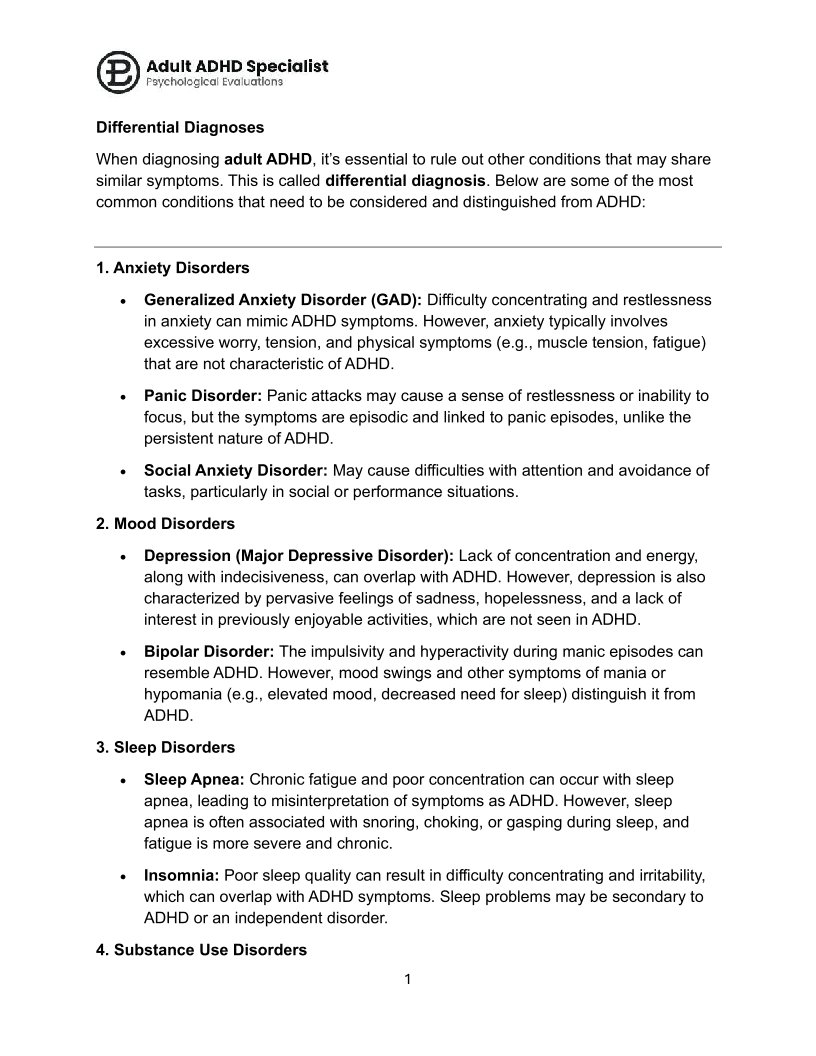
Differential Diagnosis — Strategies for ruling out mimics and comorbidities.
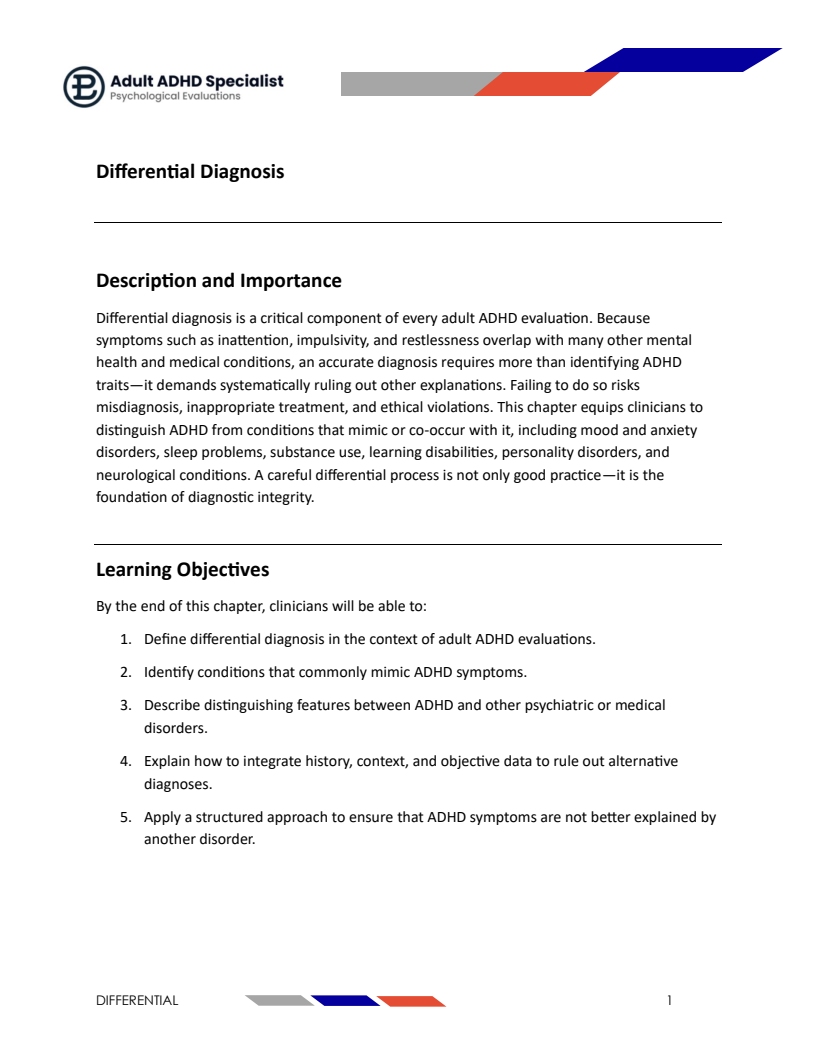
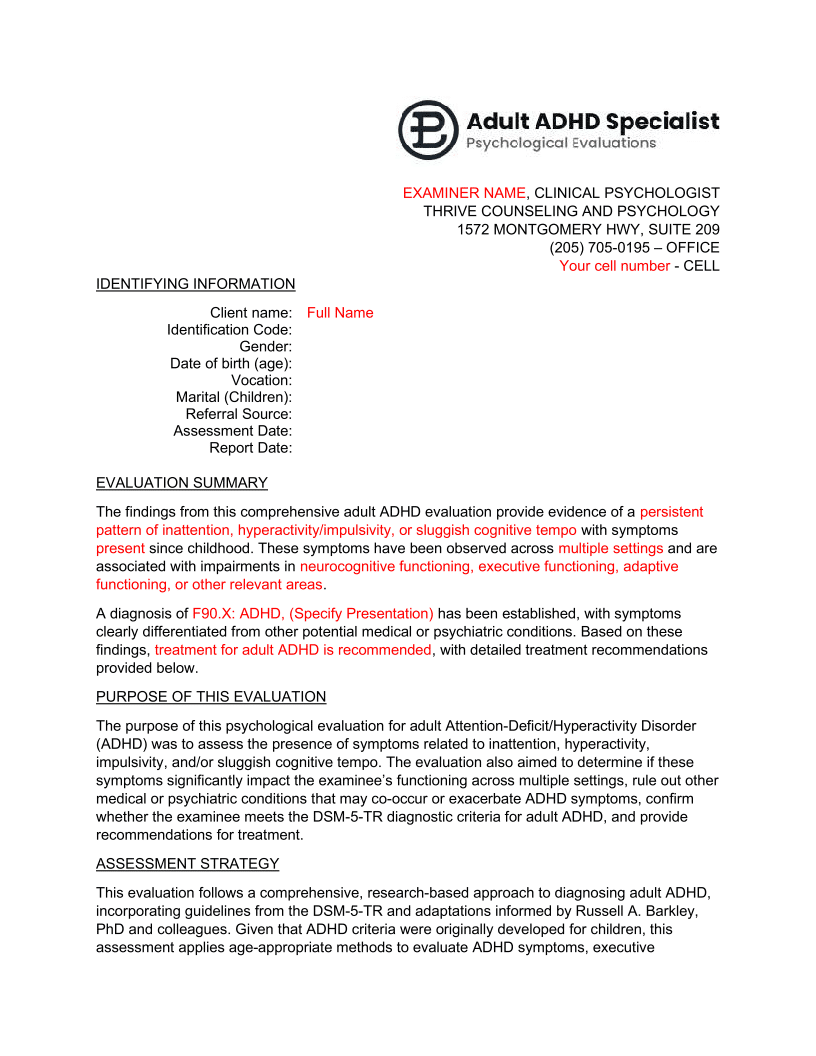
Disability and Accommodations — Documentation guidance for ADA/504 accommodations.
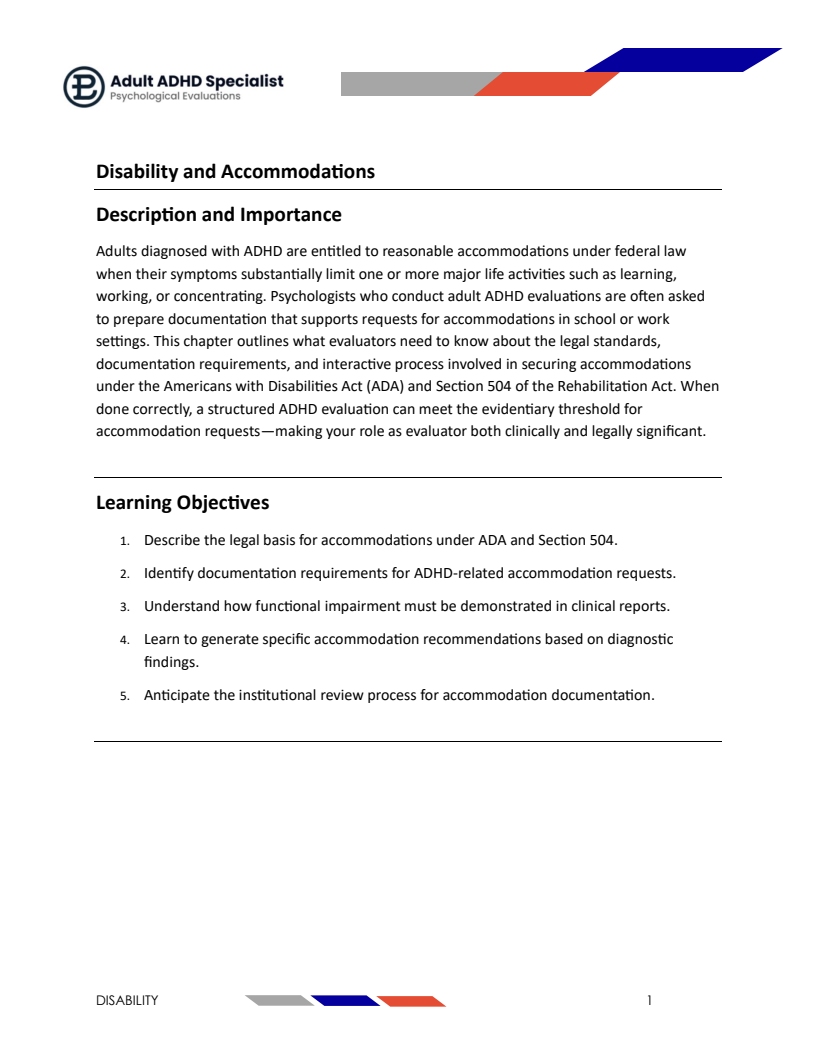
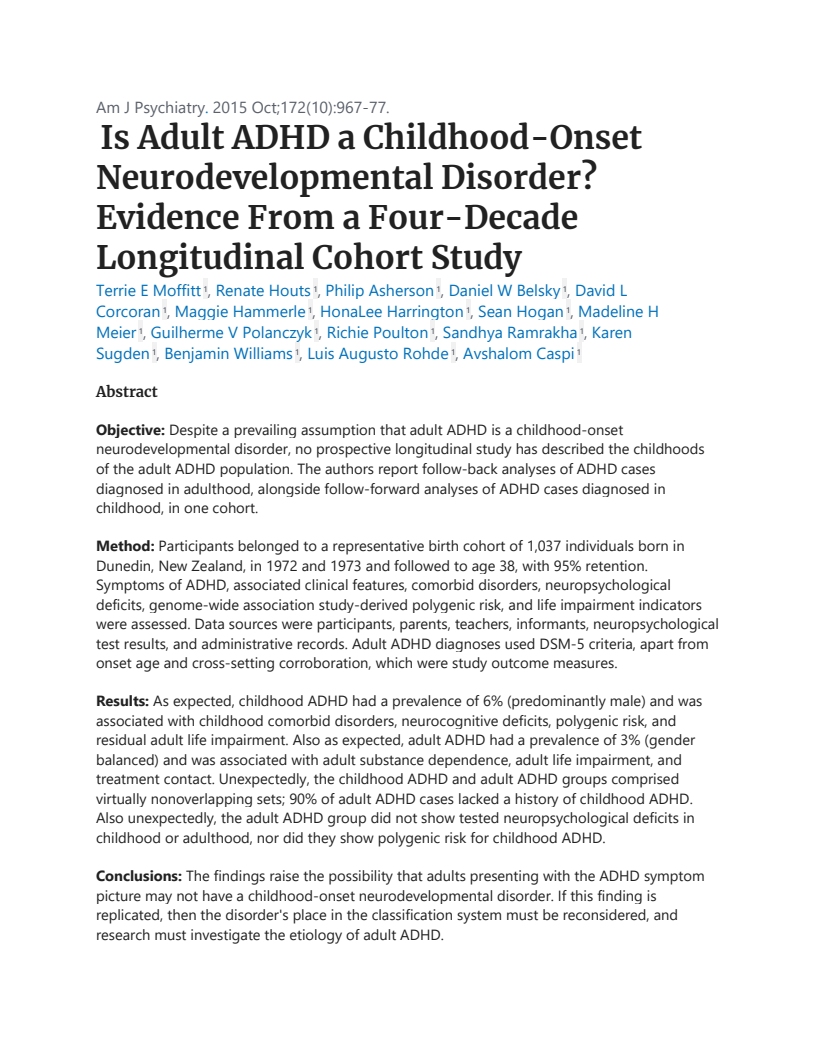
Is Adult ADHD a Childhood Disorder? — Evidence for developmental continuity and retrospective history.
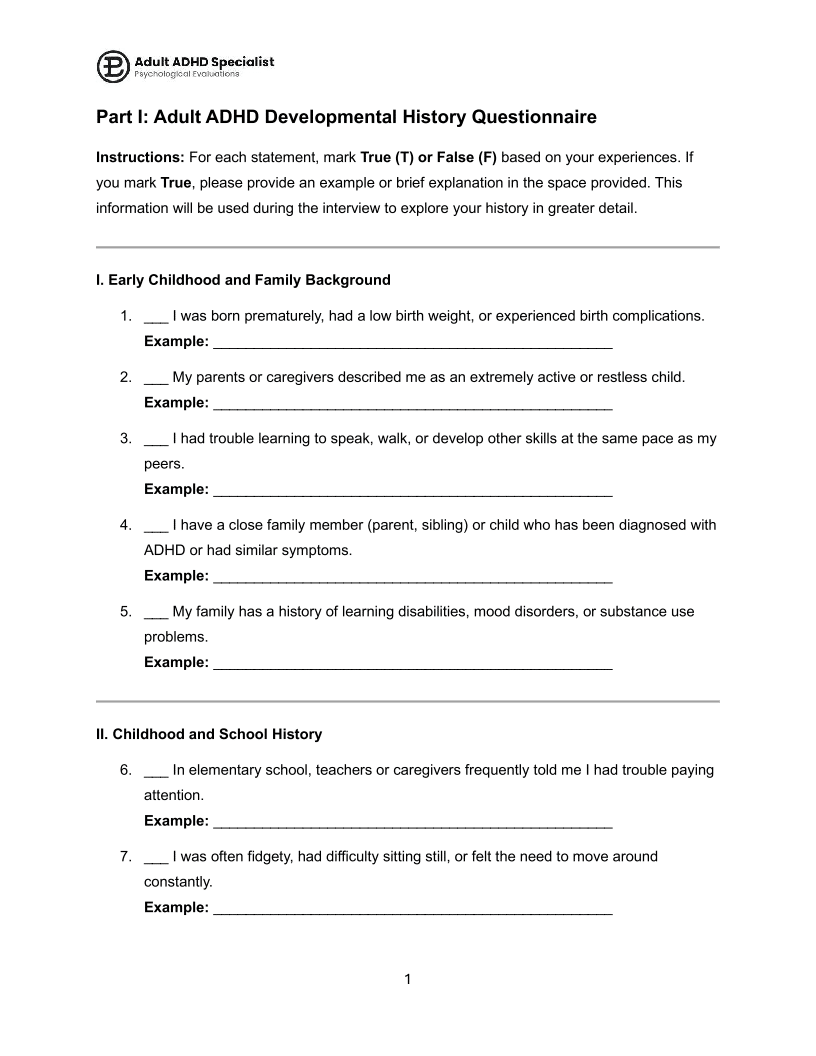
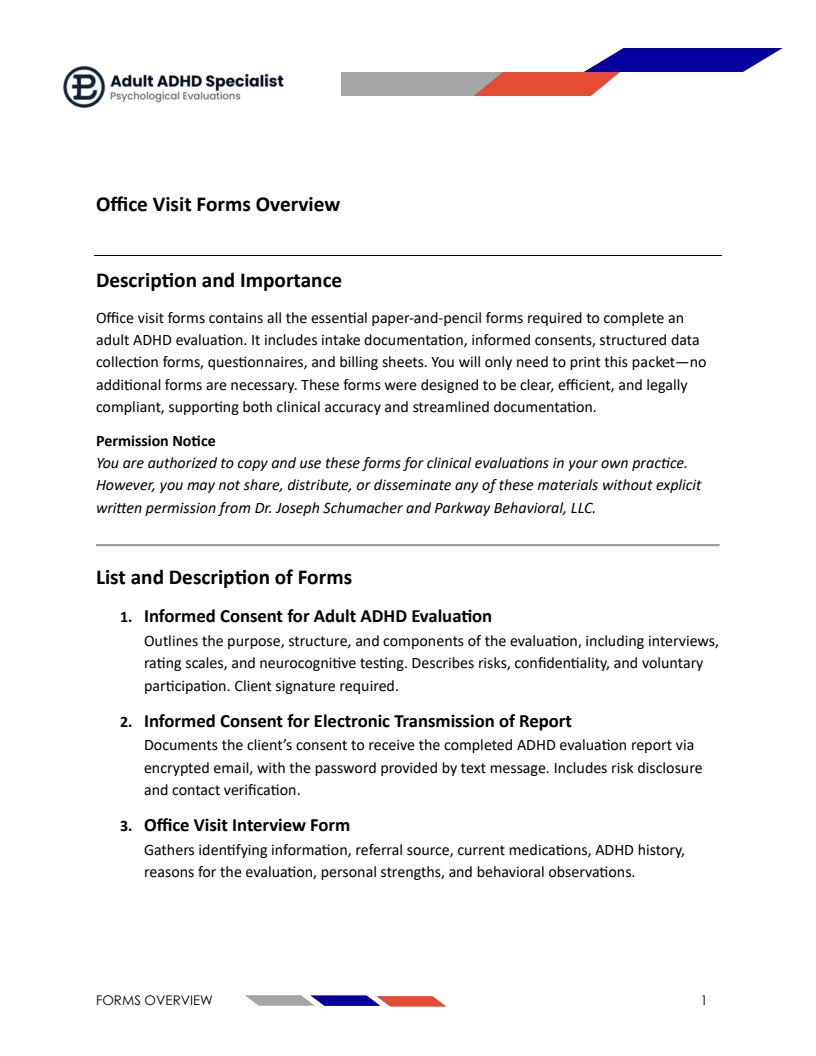
Office Visit Forms Overview — Summary of paper forms used during the clinical visit.
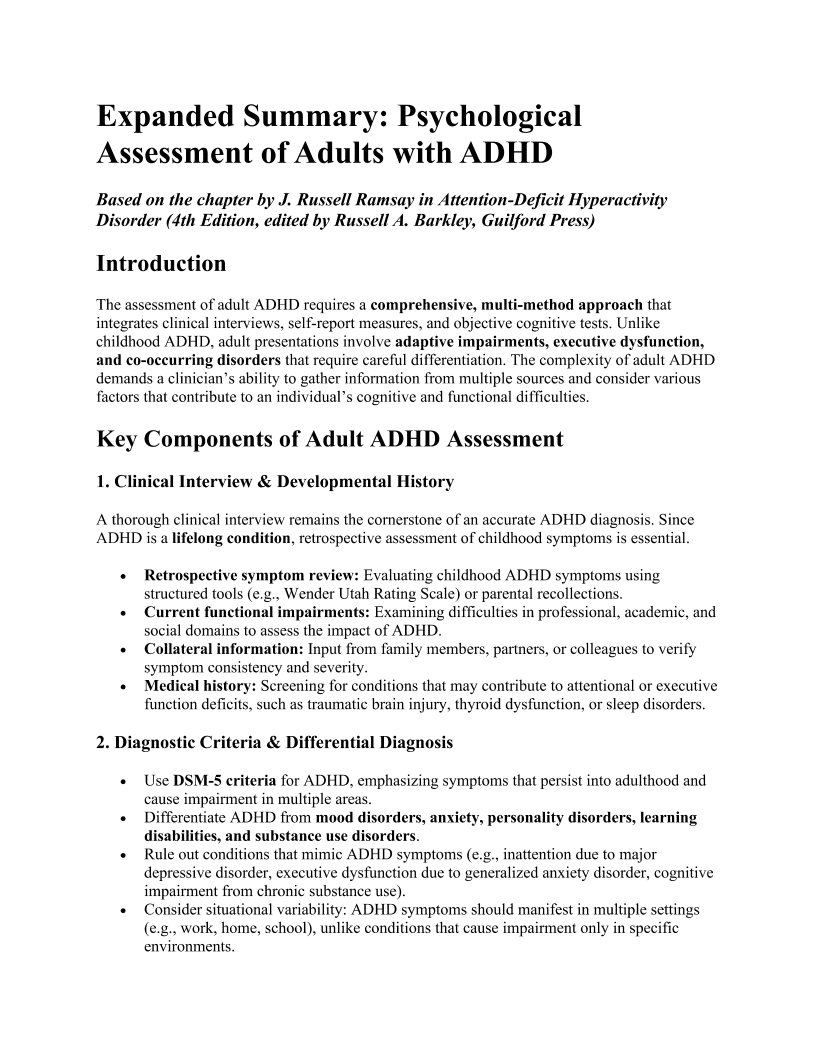
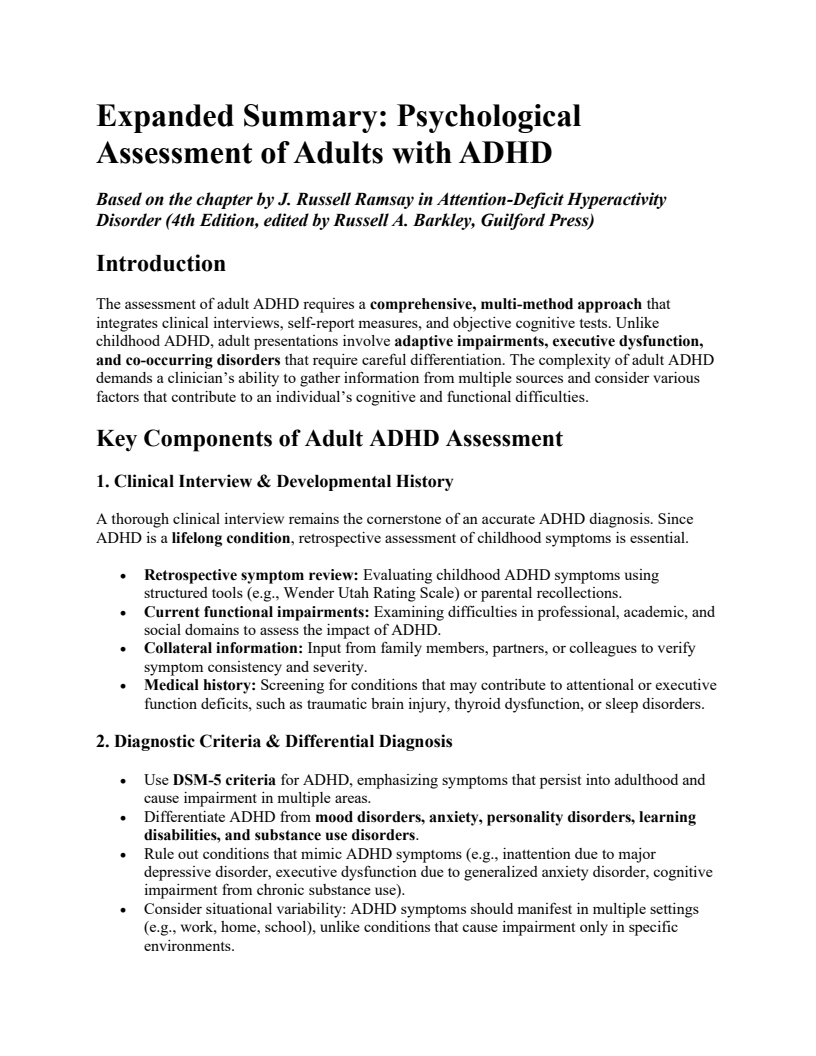
Psychological Assessment — Synthesizing data sources to build diagnostic impressions.
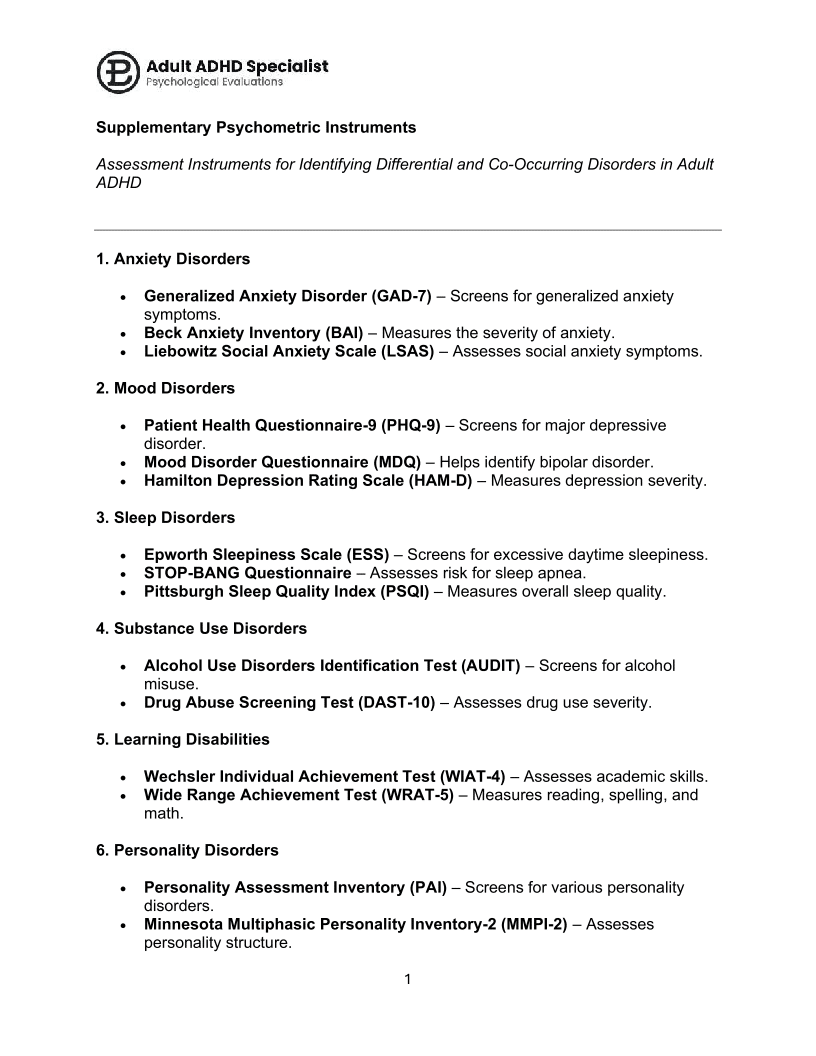
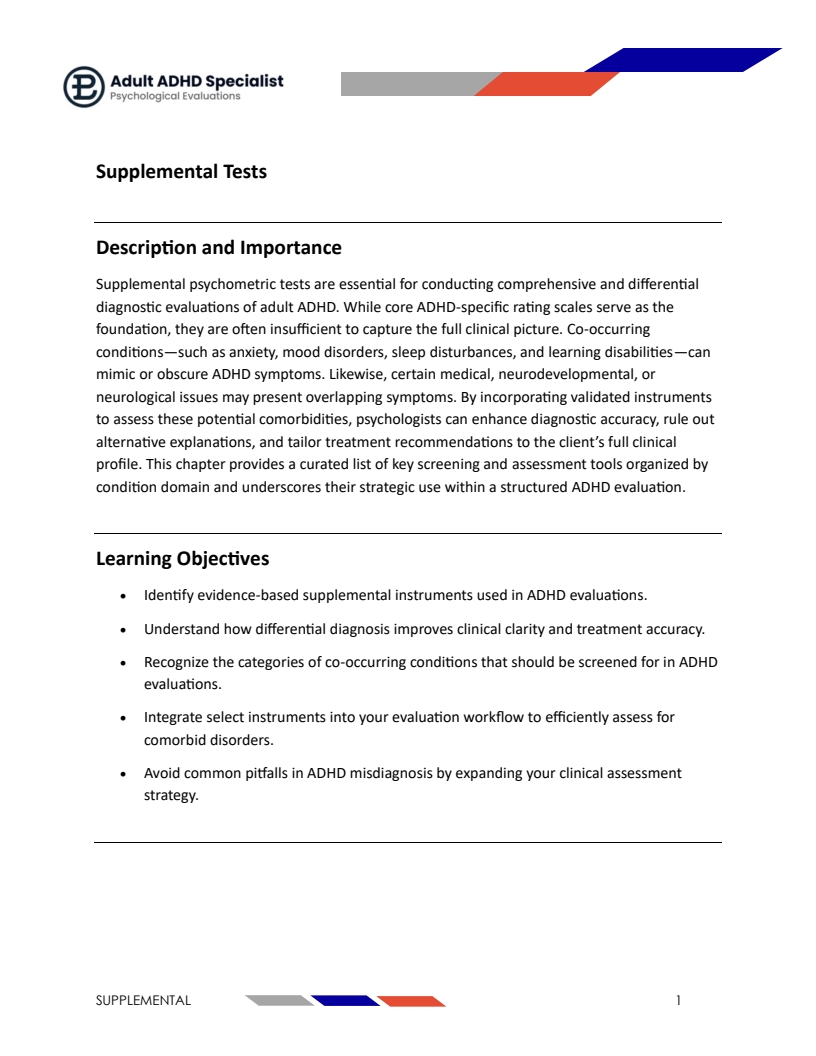
Supplemental Tests — Screeners for mood, anxiety, sleep, learning, and substance use.
Step 4: Report Writing – Communicate Clearly and Professionally
Producing clear, evidence-based, and client-ready ADHD reports.
Item #1
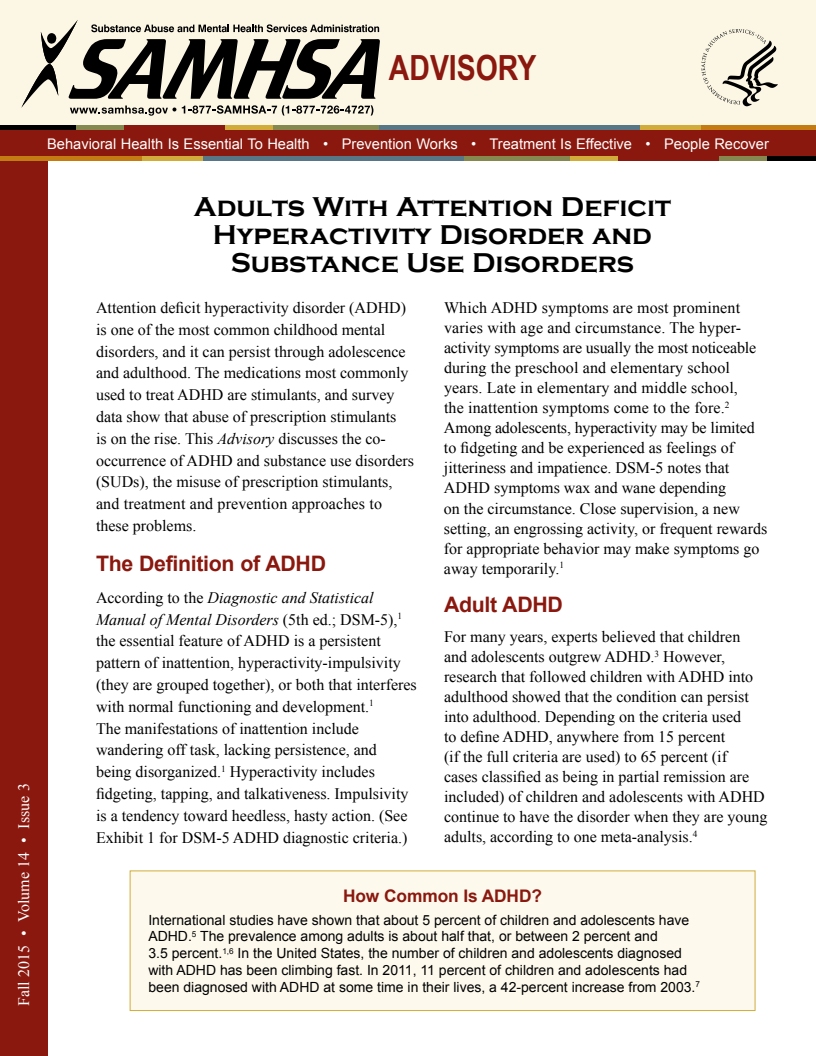
ADHD and Substance Use — Guidance on documenting co-occurring SUD.
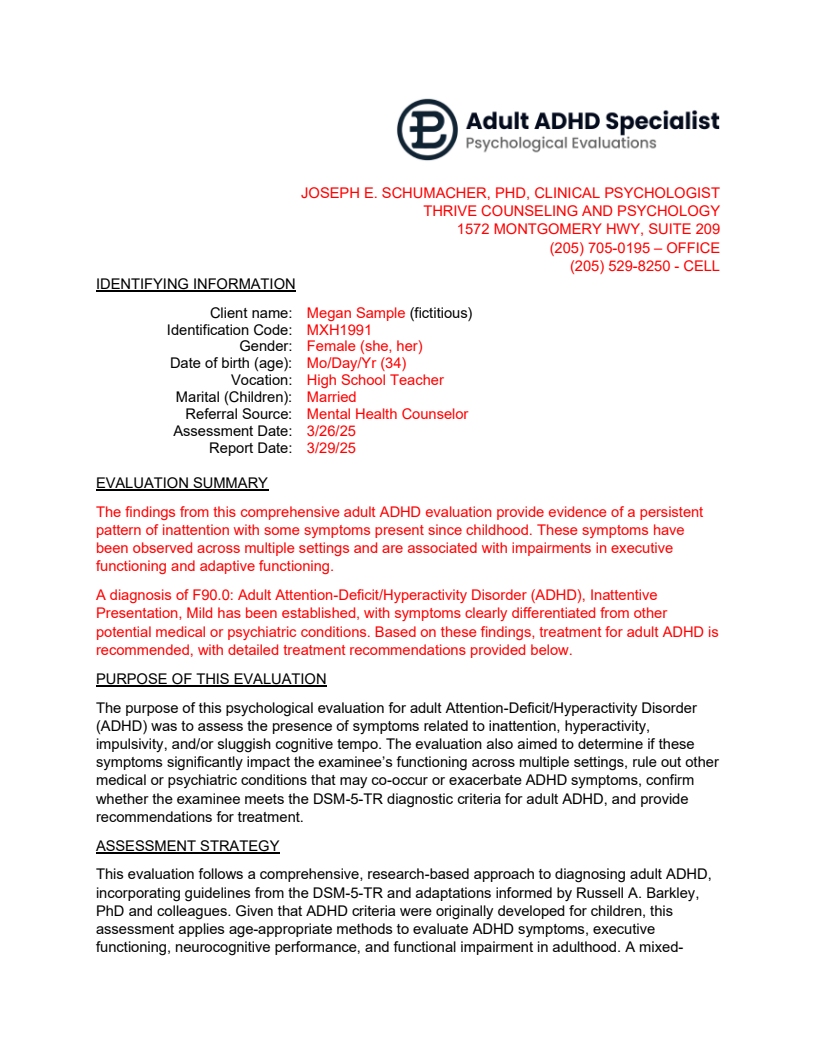
Basic Report Sample — Example report using real-world language and layout.
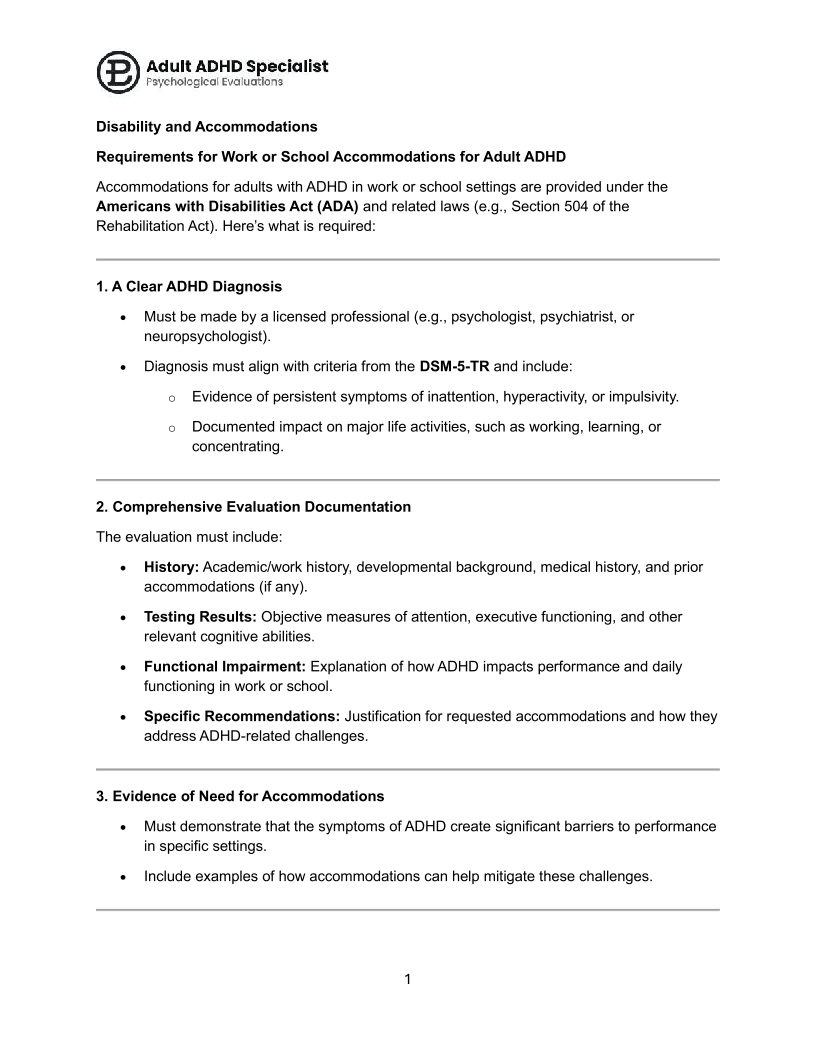
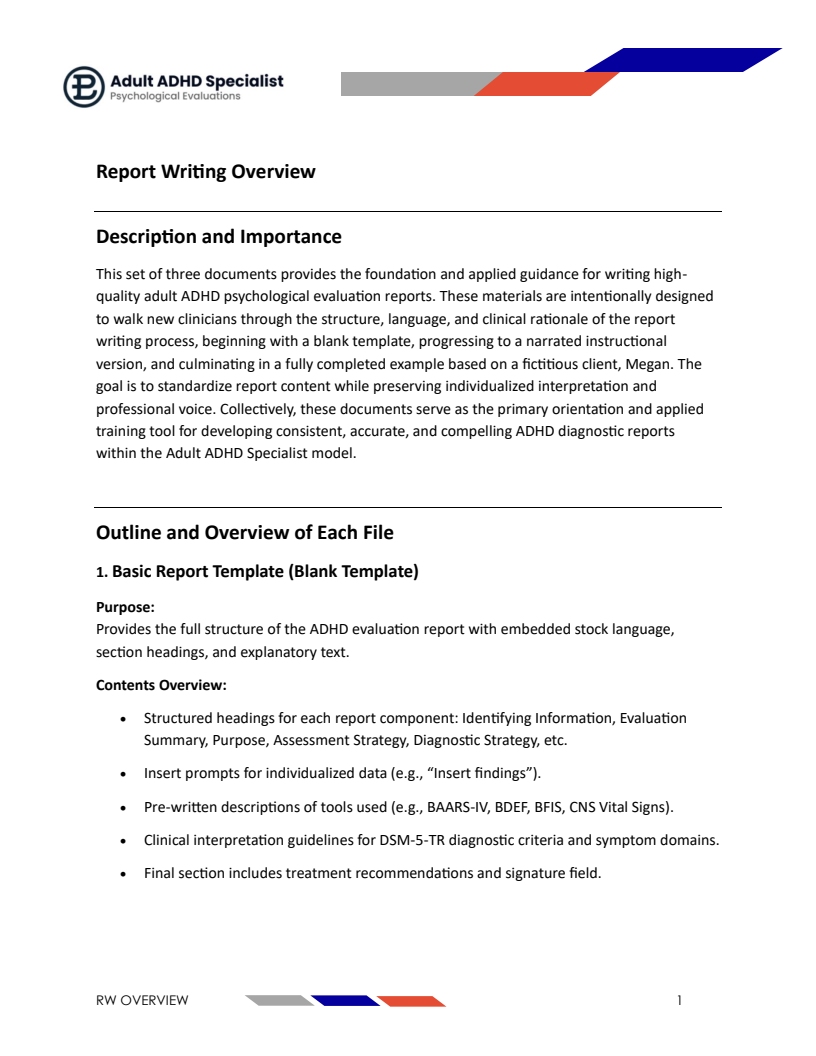
Basic Report Writing Overview — Orientation to the structure, process, and pacing of writing.
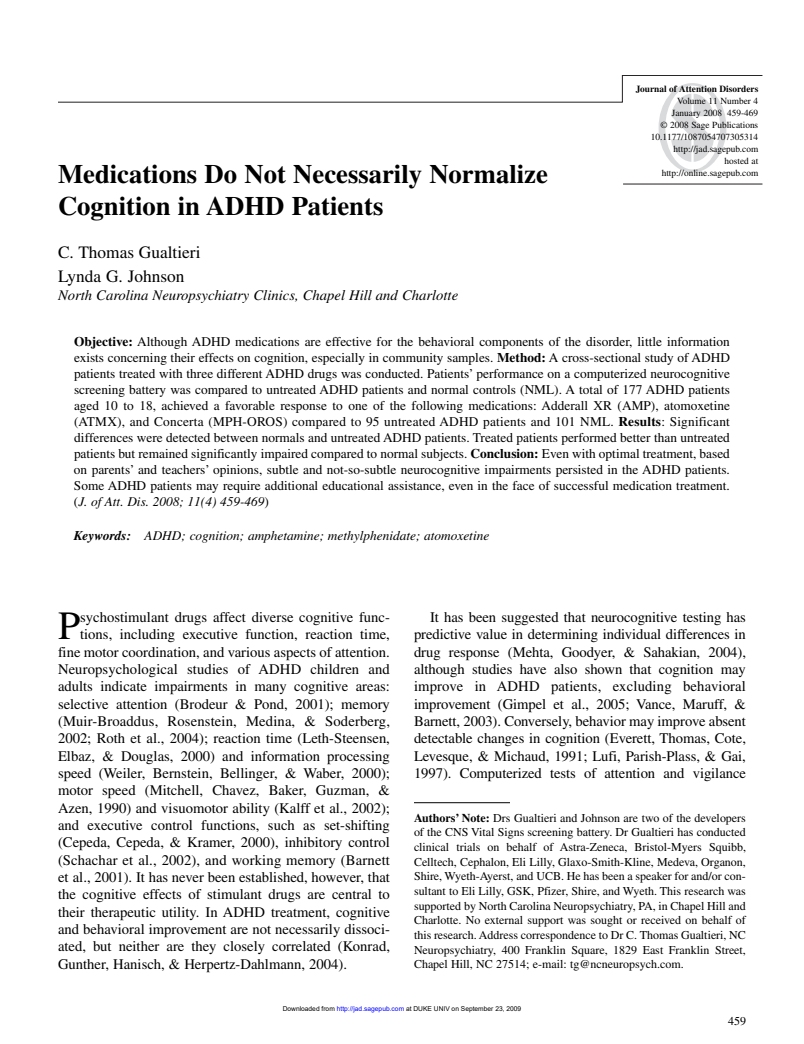
Medication and Neurocog — Understanding the effect of stimulants on test results.
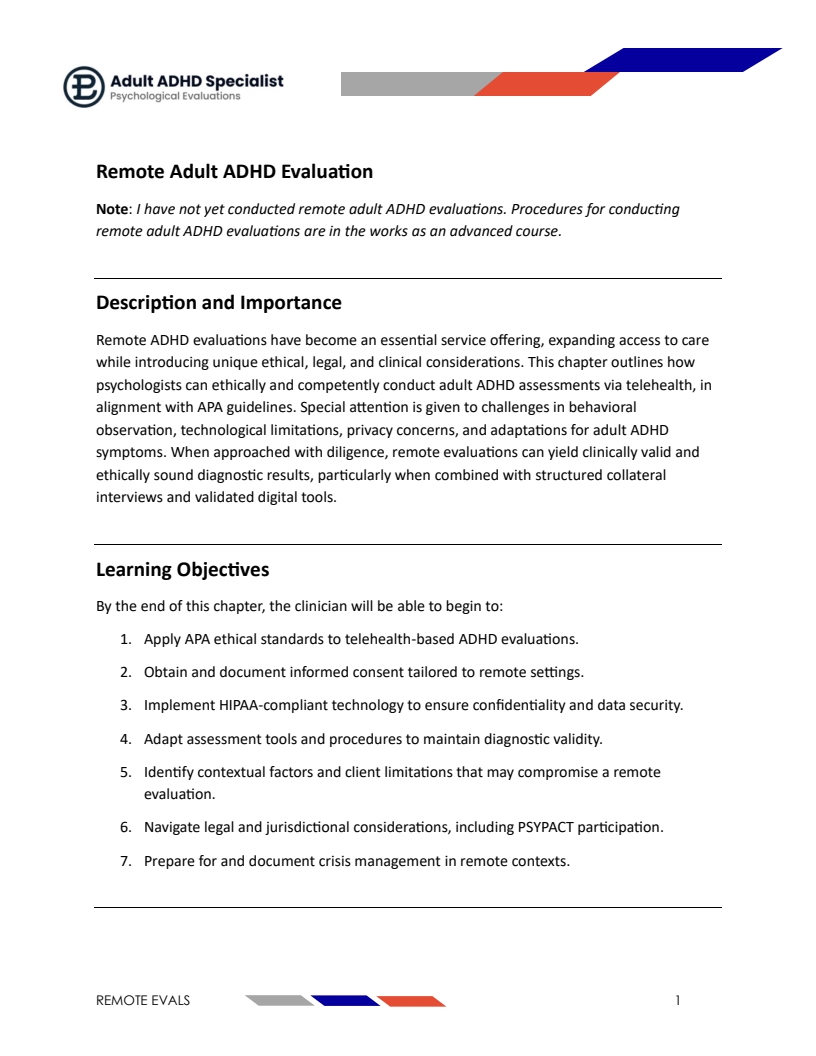
Remote ADHD Eval — Writing adjustments for telehealth-based assessments.
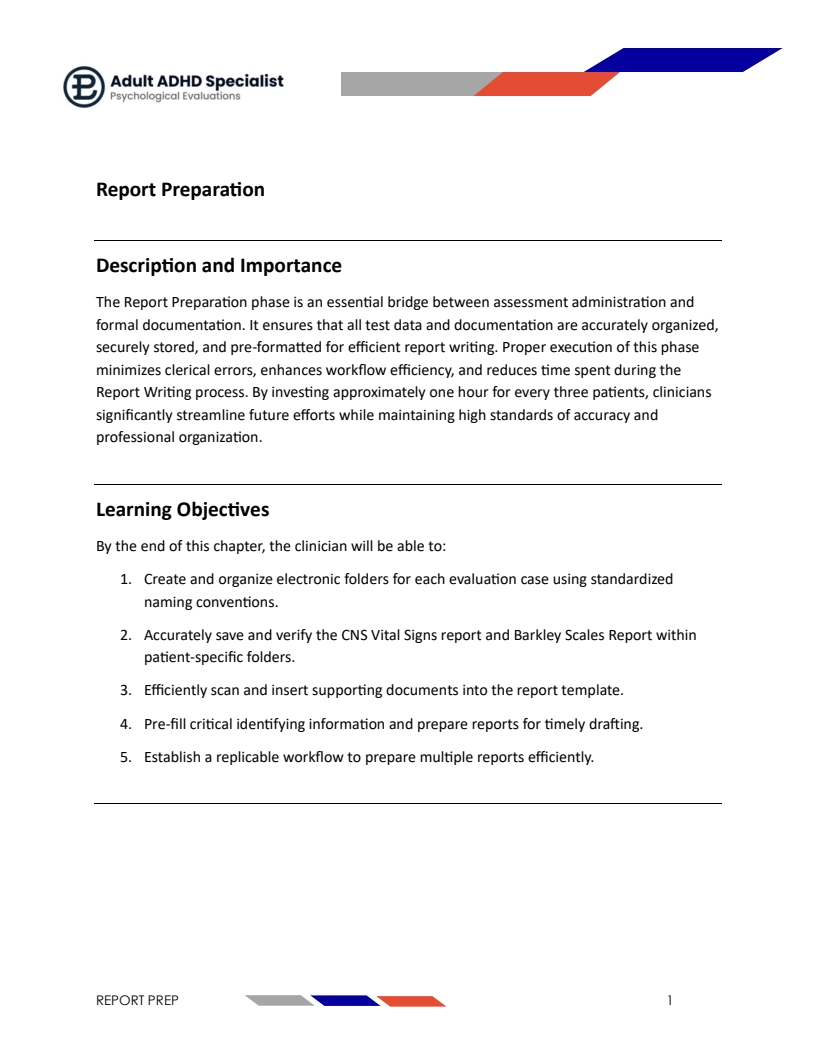
Report Preparation — Organizing materials and starting your report efficiently.
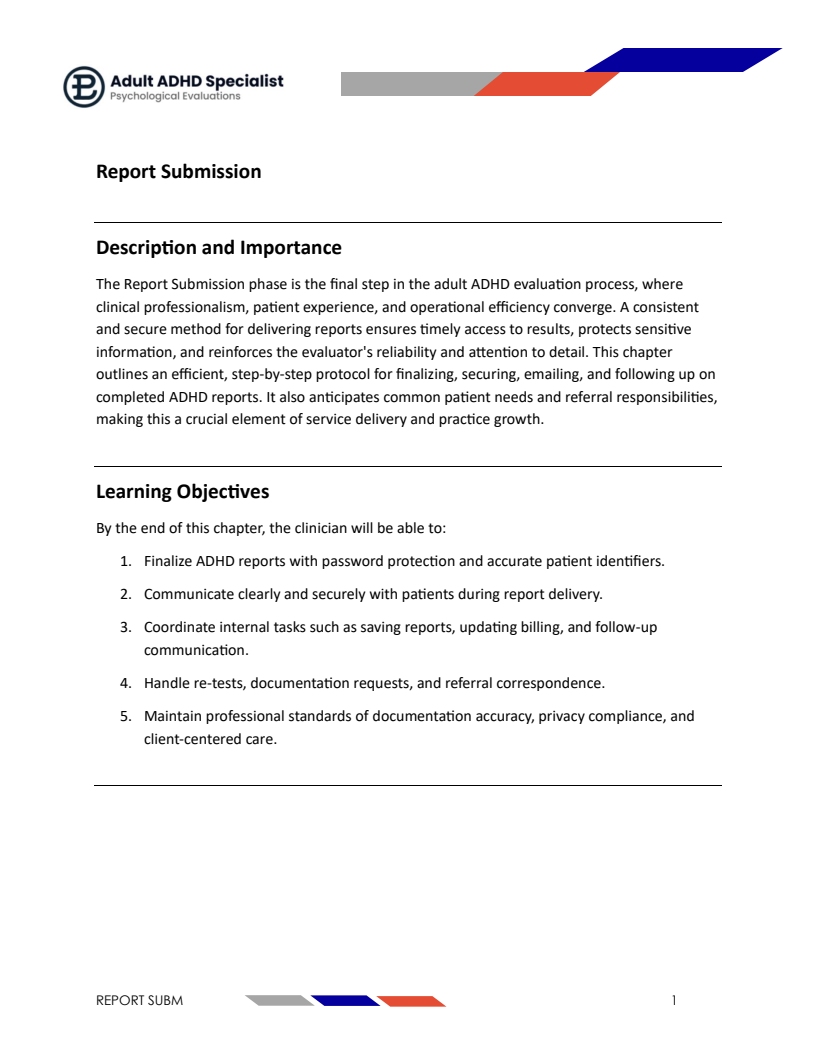
Report Submission — Secure protocol for delivering reports to clients.
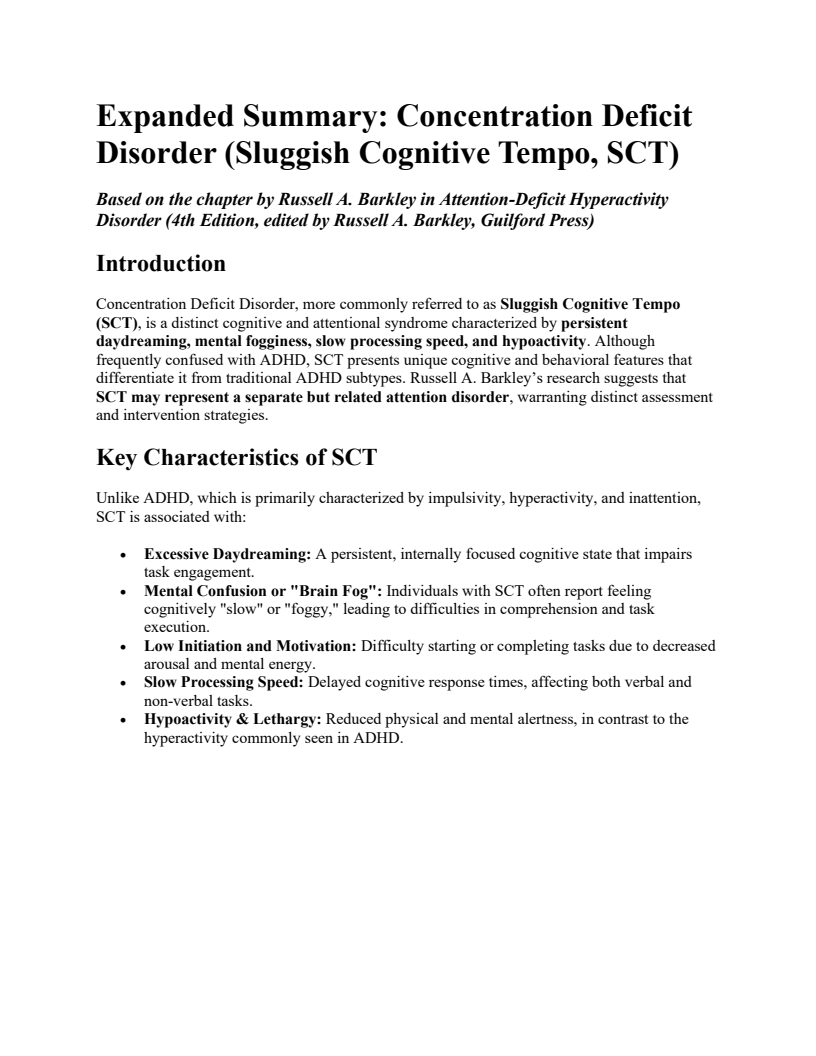
Sluggish Cognitive Tempo — Writing about SCT distinctly from ADHD.
Forms and Protocols
All clinical forms and procedural guides provided in editable digital format for your practice.
Item #1
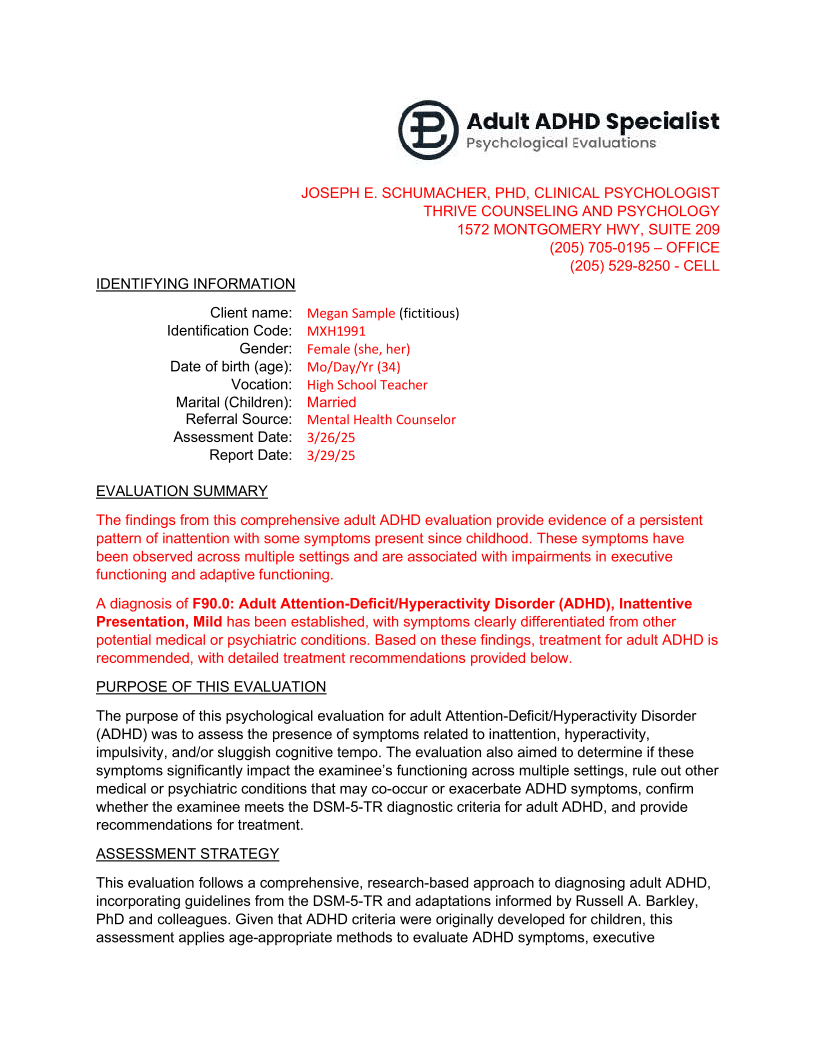
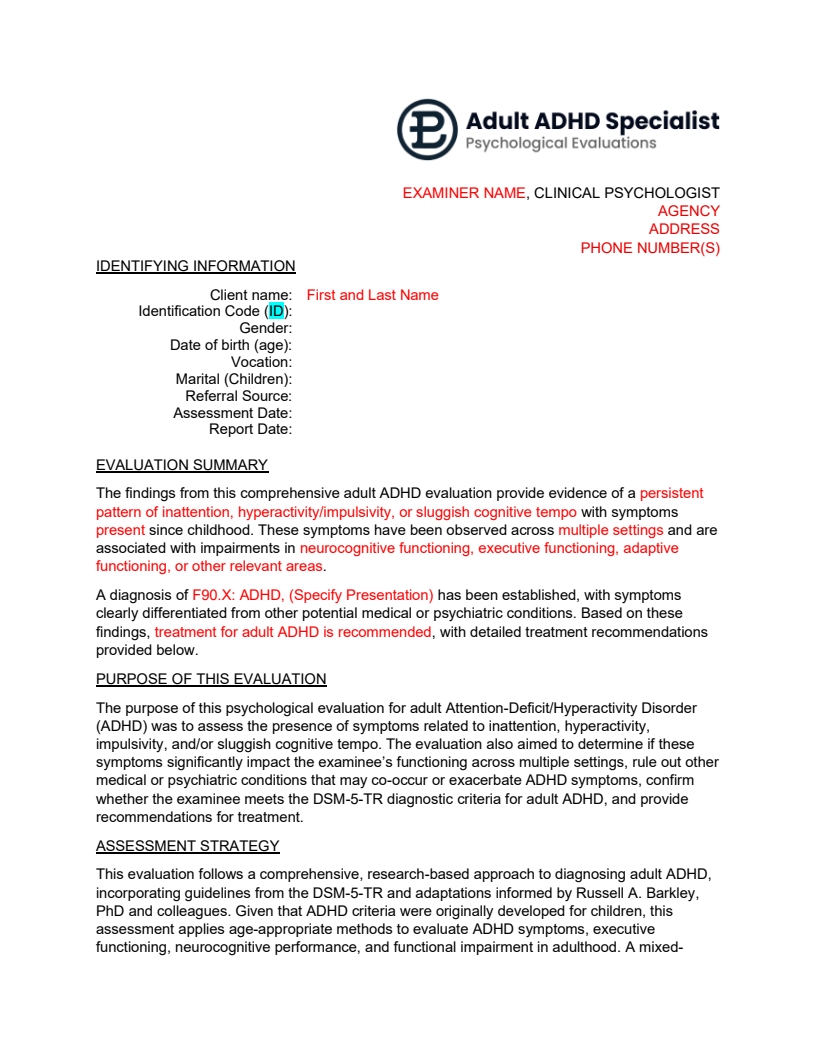
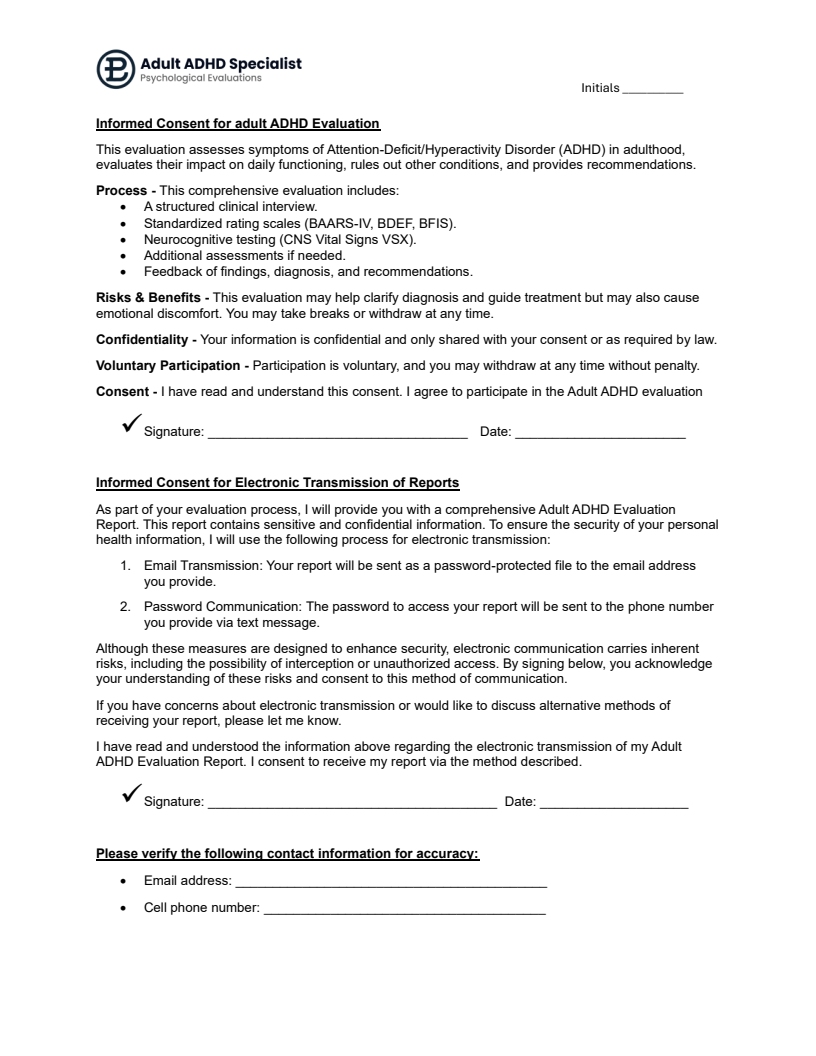
Basic Report Template (Step 4) — Standardized template for your ADHD evaluation reports.
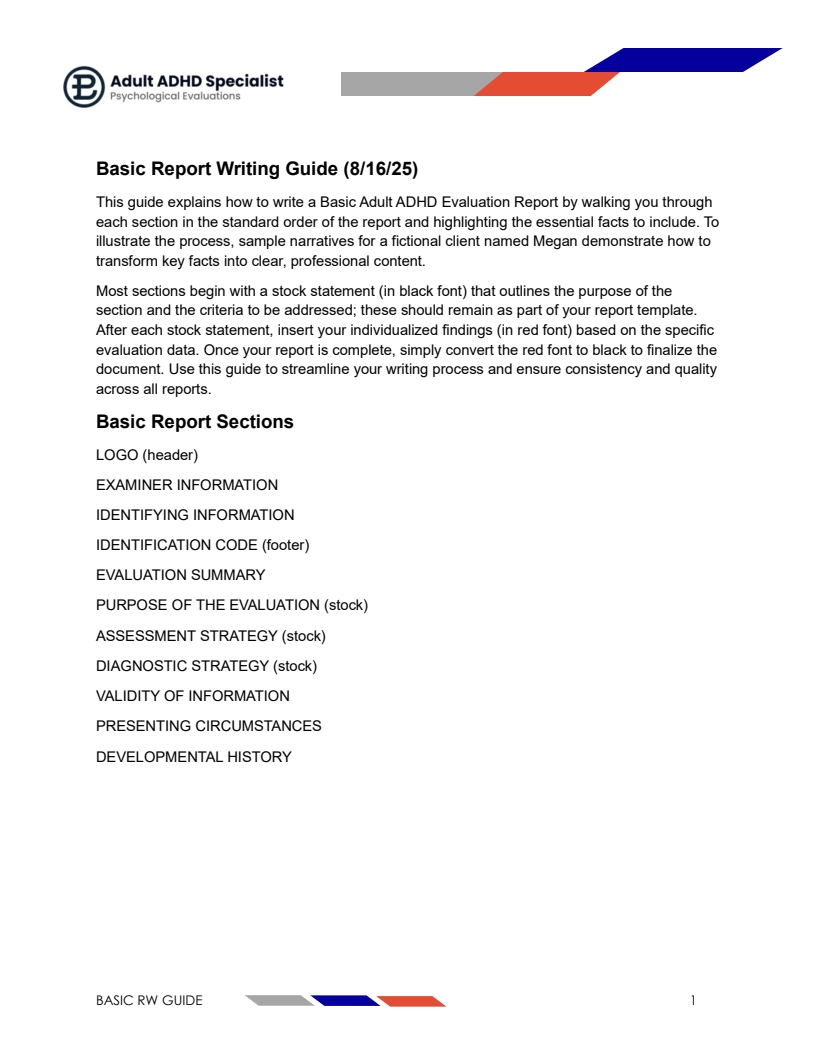
Basic Report Writing Guide (Step 4) — Instructions for writing clear, consistent reports.
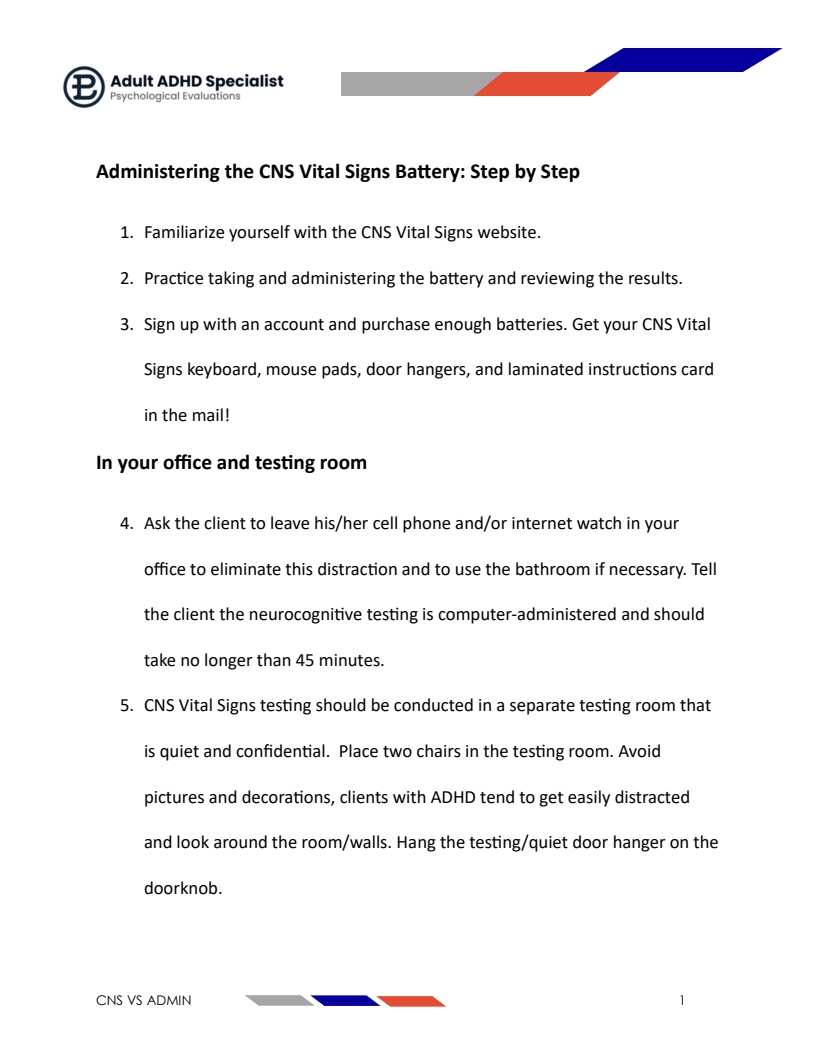
CNS Vital Signs Administration Protocol (Step 2) — Step-by-step guide for neurocognitive testing.
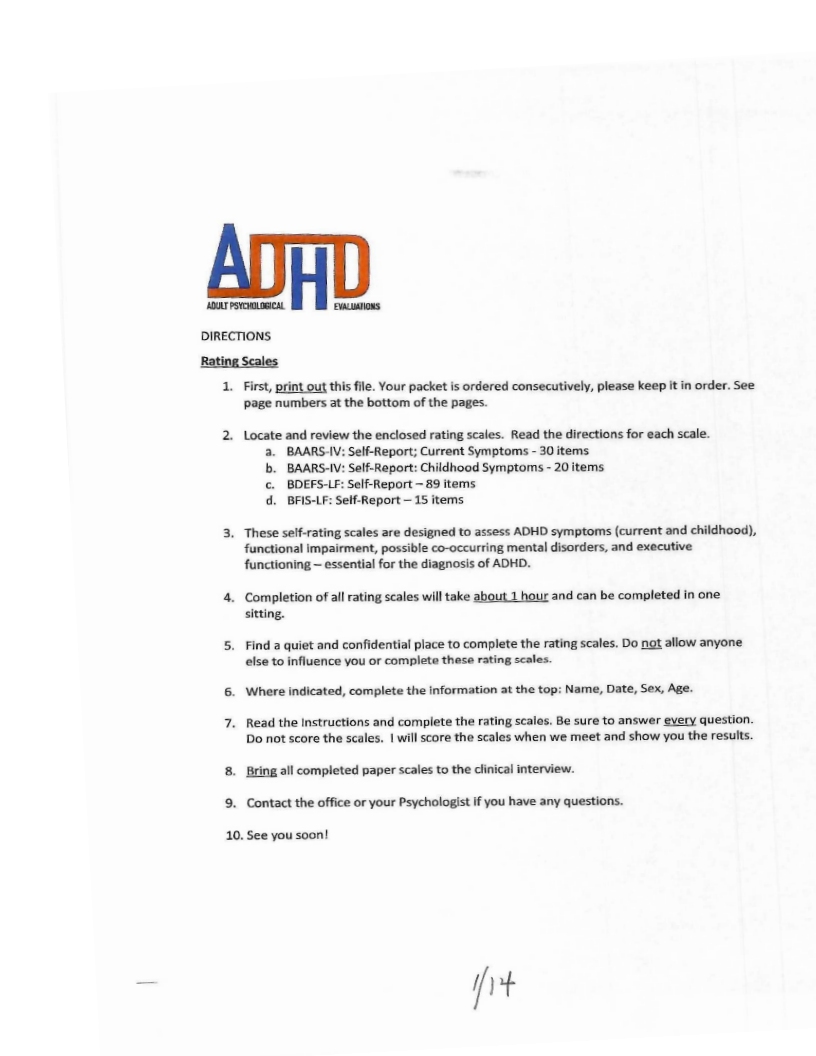
Homework Packet (Step 1) — Pre-visit ADHD rating scales to save office time.
Office Visit Forms (Step 3) — Core assessment and documentation forms.
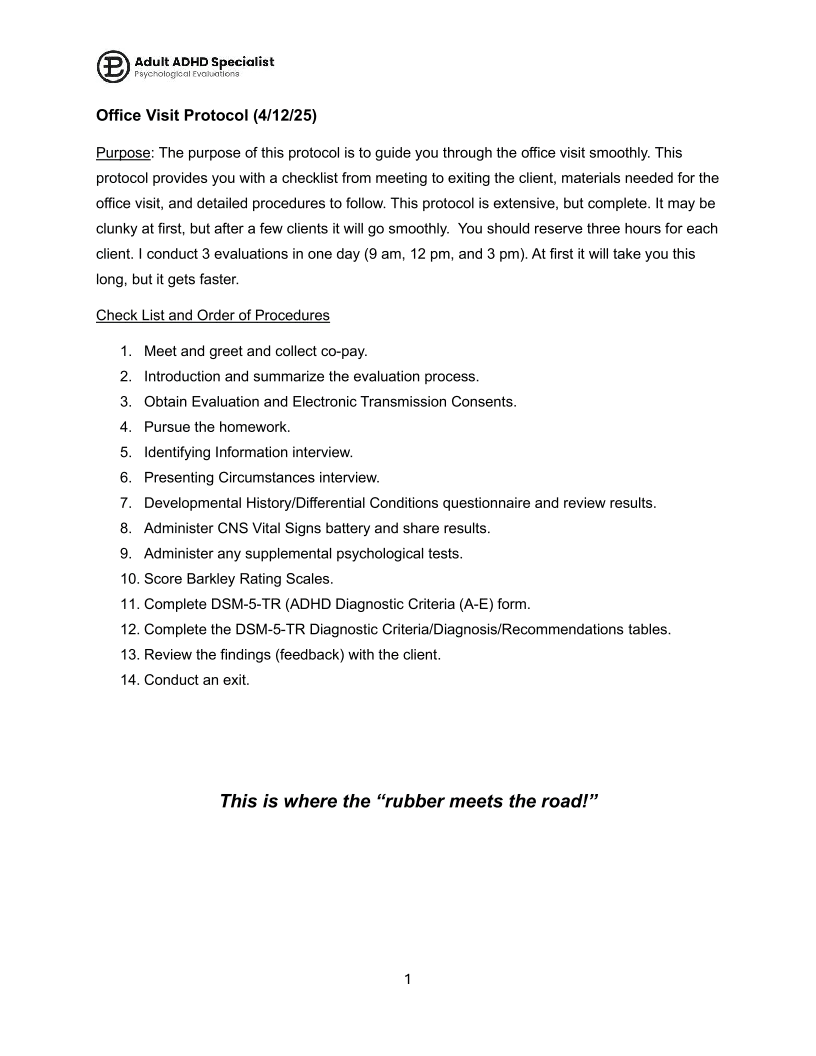
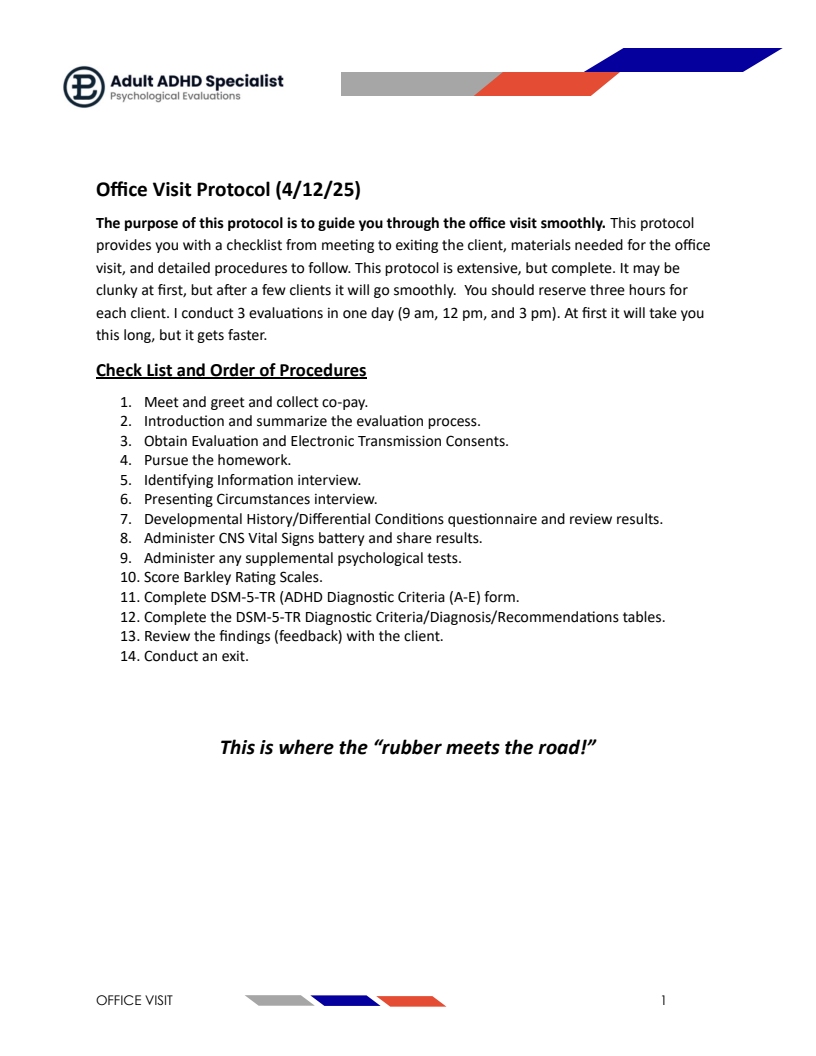
Office Visit Protocol (Step 3) — Workflow for conducting the evaluation session.
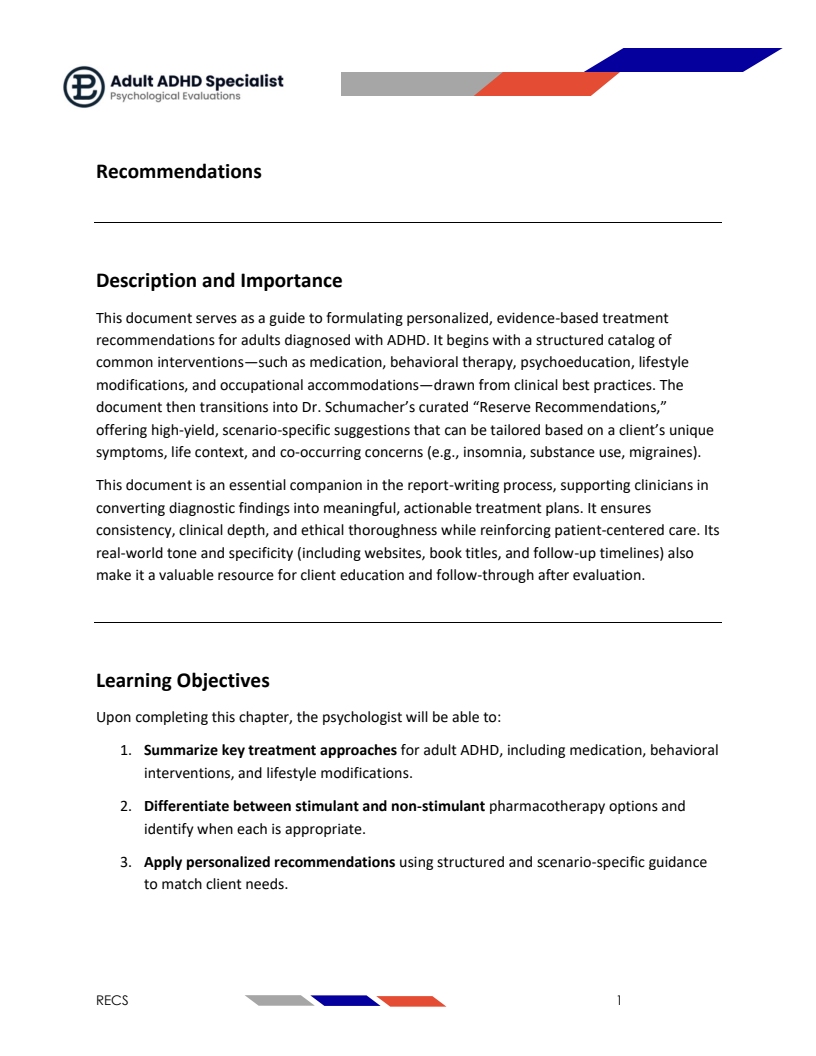
Recommendations (Step 4) — Template language for clinical recommendations.
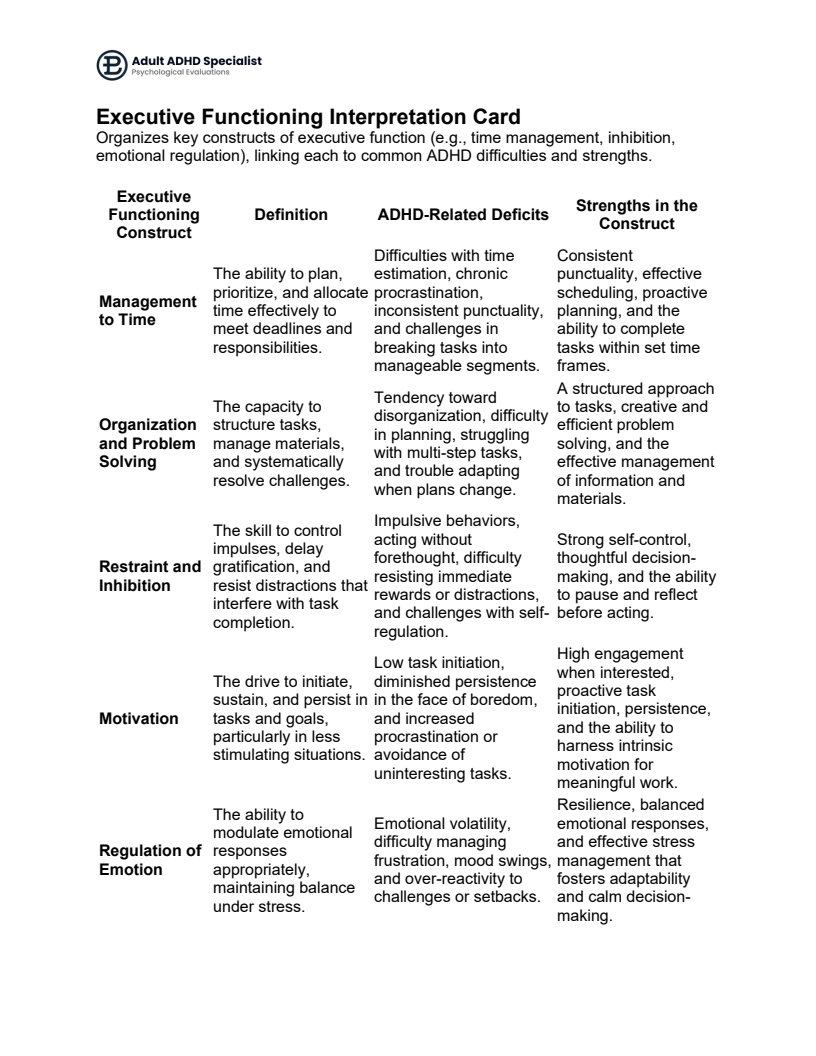
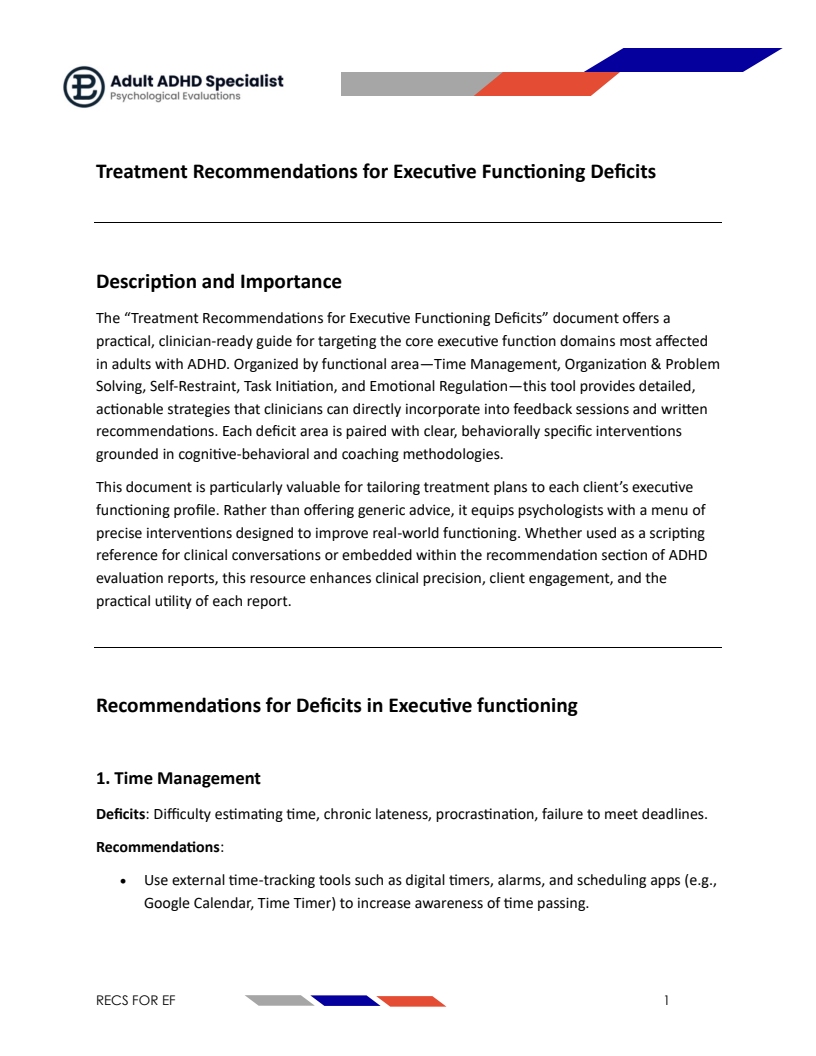
Recommendations for Executive Functioning Deficits (Step 4) — Targeted suggestions for EF weaknesses.
Quick-Reference Tools
Quick-reference tools for diagnostic clarity and report writing.